20 Corrections staff who could have been prosecuted over the death of Jai Davis

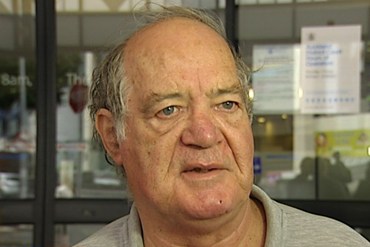
David CrerarWhat’s wrong with the police? For the second time, they have announced they will not be charging anyone over the death of Jai Davis in Otago prison. Davis died two days after he smuggled drugs into the prison by ‘internal concealment’ in February, 2011.

At the coroner’s inquest in November last year, Detective Inspector Steve McGregor said charges against Corrections officers had been considered – for manslaughter and criminal nuisance – but eventually claimed the evidence didn’t meet the threshold for a successful prosecution.

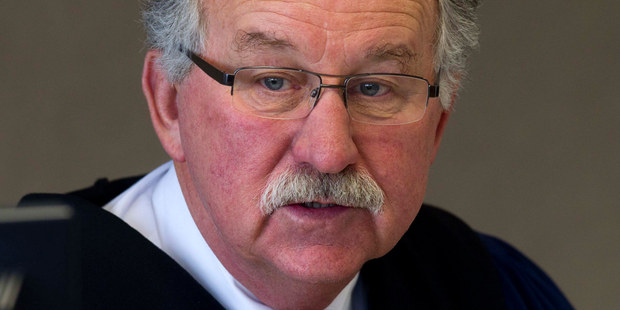
In reality, there is no threshold – the Solicitor General just made that up. But after the inquest, Inspector McGregor announced police would reconsider their decision not prosecute. Today, two months later, the coroner, David Crerar (right), announced the police have advised that no charges will be laid afterall. It seems the evidence still doesn’t meet the non-existent ‘threshold’.

The prison protocol

How is this possible? The Corrections Department has a written protocol called: “Management of prisoners suspected of internally concealing unauthorised items”. It says that the prisoner should be placed in a ‘dry’ cell – one without a toilet. When the prisoner needs to ‘go’, they give him a cardboard potty. Officers then examine the contents so they can retrieve the drugs and charge the prisoner with bringing in the ‘unauthorised item’. The policy also says that “a Medical Officer must be informed”. The reason is obvious – a prisoner with drugs inside might die. He needs to be examined and, if necessary, sent to hospital for an x-ray.

The Customs Service has a similar protocol and they advise that “no person has ever died while being detained by Customs” when following this policy.

Three prison managers involved

In Davis’ case, there were at least 20 employees at the Otago prison who ignored the protocol. Three of them were prison managers. The most senior was acting prison manager, Chris Gisler, who had been with Corrections for 21 years. Believing that Davis would be concealing drugs when he arrived, Gisler gave the order to segregate him in a dry cell ‘for the purpose of security, good order, or safety of the prison’ under section 58 of the Corrections Act. He probably could have saved Davis’s life by using section 60 of the Act – ‘segregation for the purpose of medical oversight’.  But he didn’t think of that.

Gisler was off duty when Davis was brought in so he delegated the task to Operations Manager Ann Matenga and Security Manager Michael Fitzgerald. On Friday 11th February, 2011 when Mr Davis arrived at the prison, Ann Matenga signed the segregation order stating:

“I will notify the Medical Officer of the prison of this segregation within the applicable timeframe after the above named prisoner is placed in a cell…”

The applicable timeframe was three hours. Ms Matenga was on duty all weekend but never called the doctor. At the inquest she claimed she didn’t know that ‘medical officer’ meant ‘doctor’.

Michael Fitzgerald was the Security Manager. He briefed the security team that Davis was coming in with drugs on board. One of his team then went to the prison health centre and advised the nurses on duty of the situation. The reality was that Gisler and Fitzgerald were totally focussed on security issues – preventing Davis passing the drugs to other prisoners – so they didn’t even think about calling the Medical Officer. Nor did they check with Ann Matenga to see if she had done so. Not one of these three managers thought it necessary to advise the prison doctor that a man was being brought in who was at risk of dying from a drug overdose. It wasn’t even discussed.

Six prison nurses involved

Six different nurses were on duty over the weekend – three of them on the day Davis died. They all knew Davis was in the dry cell because he was suspected of concealing drugs internally.
None of them called the doctor – not even on the Sunday morning when the prison officers on duty noticed Davis had deteriorated and looked seriously unwell. So unwell, that one said:

“He looked like a corpse. His eyes were sunken and he had the cold sweats. .. his breath smelt like faeces… and he had slurred speech as well. He looked as though he should have been in hospital.”

Because the officers were concerned, nurses checked on Davis three times that morning but did nothing. One of them, Gayle Catt, told Corrections Inspector David Morrison, that…

“(Davis) seemed to slightly deteriorate from 7-30 to 8-30am. My concern was that he would go unconscious but officers would think he was asleep.”

Three years later at the inquest, she’d forgotten she said this and claimed: “He was well; he was absolutely well every time I saw him. I had no concerns about his physical safety whatsoever.”

Then there’s Janice Horne, the last nurse to see Davis alive. She was on the afternoon shift on Sunday and only went to see Davis once in her eight-hour shift – at about 4 p.m. Even then, she didn’t go into his cell to examine him. She spoke to him though a small flap in the cell door. Afterwards, she made an observation in his Medical notes that he appeared to be under the influence of drugs…

“because of the slow movements that he was making… she had a conversation with the unit officer where she stated to the officer, Mr Davis ‘looks stoned’.”

Nurse Horne didn’t seem to realise how serious the situation was. She carried on with her other duties, knocked off work at 8 p.m. and went home. Davis appears to have died two hours later. His last recorded movement on the CCTV tape occurred at 10.01pm. A few months after Davis died, Janice Horne resigned and went to live in Australia.

The health centre manager

Despite the risk posed by internally concealing drugs, not one of the six nurses on duty over the weekend called the prison doctor. Not one of them even bothered to consult with the health centre manager, Jill Thompson, who was the head nurse. If they had, Ms Thompson could possibly have saved Davis’ life. When she was interviewed after his death, she said:

“As there was clear knowledge that this person was concealing drugs, why did he come here in the first place? The prison is 45 minutes away from a hospital. If drugs had exploded in a prisoner’s gut, we would not be able to get (him) to the hospital in time…”

That’s her clinical opinion on what should have happened. But it didn’t happen – because Jill Thompson wasn’t at work on the Friday afternoon when Davis was brought in. She wasn’t away at a managerial seminar. She wasn’t sick. Three years later when asked by lawyers at the inquest where she was on that Friday, Ms Thompson claimed she didn’t remember.

The police didn’t seem to realise the significance of Jill Thompson’s unauthorised absence. In the course of a three year investigation, they never even asked her where she was that day. Perhaps she went shopping. The point is she abandoned her legal duties and Mr Davis died. That’s called negligence and it’s potentially a criminal offence. But Ms Thompson was never prosecuted. She didn’t lose her job. She wasn’t reprimanded by Corrections. She wasn’t even questioned by police.

Ten prison officers involved

At least ten Corrections officers were also aware that Davis had drugs on board – and could have called the doctor. Five of them escorted Davis from the prison gate to the At Risk Unit. One of them, Chris Dalton, wrote on Mr Davis’s At Risk management plan “information received from operational intelligence unit that prisoner is concealing drugs on person.” He told police it was his role to ensure the safety of both staff and prisoners and “if anything needs to be done when there is no manager, it falls upon me to action that request.” There was no manager, at least no health centre manager. But Dalton didn’t call the doctor either.

Another officer, James Neill testified that he was briefed by security manager Michael Fitzgerald. He said he then went over to the prison health centre and advised two nurses that “a prisoner was coming in suspected of concealing drugs”. Mr Fitzgerald showed one of the nurses a document titled “Advice to Prisoner Suspected of Concealing” and said “a medical officer is required to sign it.” But the medical officer wasn’t there. Mr Fitzgerald took the form away – so no one signed it. (The medical officer was hardly ever there. See Prison deaths linked to Corrections refusal to employ sufficient doctors.)

There were also half a dozen other prison officers on duty in the At Risk Unit on the day Davis died. Two or three of them were concerned that Davis had deteriorated and should have been taken to hospital. But none of them made the call – they all thought it was the nurses’ job.

The police have a job too – to prosecute those responsible when their negligence contributes to someone’s death.   At the inquest, Senior Sgt Colin Blackie who conducted the police investigation, gave the impression that, at the very least, he would have prosecuted some of the nurses. But he was taken off the case. The harsh reality is that no one in the Corrections Department has ever been prosecuted over a so-called ‘unnatural death’ in prison.


Detective who wanted to prosecute prison staff taken off case

BlackieNo one in the Corrections Department has ever been prosecuted over an ‘unnatural death’ in prison. In what could have been the first case, Detective Senior Sergeant Colin Blackie (right), who conducted the police investigation into the death of Jai Davis, wanted to prosecute prison staff who allowed Davis to die from a drug overdose. Despite a wealth of evidence showing prison managers, officers and nurses all failed in their duty of care, Mr Blackie was taken off the case and no one was prosecuted.

Davis died in Otago prison in February 2011 after smuggling in drugs – internally.  At the coroner’s inquest in November last year, Sergeant Blackie blamed dysfunctional relationships within the prison between management, officers and nurses.  He made it very clear he thought individual staff at Corrections should have been charged.  He told the coroner:

“There were clearly some nurses who either by their own admission or by statements of others, were not affording Mr Davis the care that he should have got… that he could not access of his own accord… (He) should not have died in that prison.”

Taken off the case

Towards the end of his investigation, Mr Blackie went on leave for two months.  When he returned, he was taken off the case. He told the inquest:

“I was informed that I shouldn’t have anything to do with this investigation”.

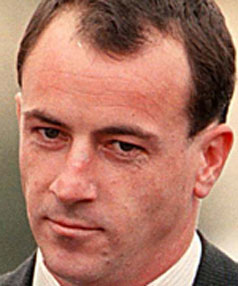
Steve McgregorHis place was taken by Detective Inspector, Steve McGregor, (left) who up till then had had almost no involvement. Mr McGregor appears to have taken over the job of preparing the police report and recommendations on the Davis case which went to the police prosecutor – who then decided not to charge anyone with anything.

The police could have consulted the Solicitor General for a Crown opinion on the case. They didn’t bother. It seems they didn’t want to prosecute anyone and justified this by claiming the evidence didn’t meet the threshold in the so-called evidential test.  In reality there is no evidential test – it seems police simply didn’t want to prosecute because, inadvertently, they also contributed to his death and their own behaviour could have been called into question.

Testimony of Neil Jones-Sexton

Corrections ‘intel’ (from prison phone monitoring) revealed Davis was going to turn himself in to Dunedin police on an outstanding arrest warrant – and smuggle drugs into Otago prison by concealing them in his rectum. This information was passed on to police by Corrections Intelligence Officer, Neil Jones-Sexton – by phone and by email.  When the police finally got around to interviewing him two years later, Jones-Sexton told Colin Blackie’s investigating team:

“I felt the information was of such importance that police needed to know immediately and consequently phoned the Dunedin Police…  At some stage I spoke to Sergeant Ritchie, Detective Sergeant Hedges, Detective Trevor Thompson and Police Liaison Officer Judy Powell and possibly other Police Intel staff over the relevant time periods.”

On 9 February, at 3.59pm, Jones-Sexton also sent an email disclosing all the relevant details to the head of the Police Intelligence unit in Dunedin, Sergeant Tony Ritchie. Sergeant Ritchie said he knocked off at 2.00pm and never got the email. At the coroner’s inquest, Jones-Sexton said that after sending the e-mail, he also phoned police again to let them know he had just sent them the disclosure.  He repeatedly told the coroner that he was ‘100% certain’ that he passed on the information prior to formal disclosure by e-mail.

What police knew

Despite Jones-Sexton’s confident assertions, all these police officers denied any prior knowledge that Davis was about to turn himself in with drugs on board.

But there’s definitive evidence that they knew. First, Jones-Sexton’s testimony was corroborated by police intelligence officer, Rennae Flockton who worked under Sergeant Ritchie. There were six police Intelligence Officers in Dunedin and Jones Sexton had daily phone contact with them. Rennae Flockton testified that they all knew that Davis would be turning himself in with concealed drugs. When he turned up at the police station on Thursday 10 February, she and some other intelligence officers went down “to look at him through the mirrored glass” where they speculated about how he might be concealing the drugs.

Second, Jones-Sexton was very thorough. He not only gave the information to police intelligence, he also conveyed it to police escort staff who took Davis to court the next day. He told them to keep Davis away from another prisoner, Dylan Hill, who was also appearing in court on 11 February to prevent Davis from giving the drugs to Hill.  The inquest heard that police at court followed these instructions to the letter.

What police should have done

Senior Sergeant Blackie said that when Davis turned himself in, the Police should have arrested him under the Misuse of Drugs Act which gives police authority to conduct a medical examination and an x-ray. If Davis had refused to co-operate, when he appeared in court the next day, police should have told the Judge that Davis was suspected of internally concealing drugs. Blackie said if they had done that, the judge would have remanded him in police custody – not Corrections custody.

That would almost certainly have saved Davis’ life – because police have a more effective protocol for monitoring drug mules than Corrections; they require four officers to watch the prisoner constantly. Their protocol says:

“The detainee is to be monitored for every second of every minute of every day of the detention. He/she is never to be left unsupervised…  The detainee is to be constantly monitored while asleep.”  

Corrections, on the other hand, only conducted observations of Davis every 15 minutes. The 15 minutes gaps allowed Davis to remove the drugs from the bottle in his rectum and swallow them – to get rid of the evidence. At the inquest, it was suggested he may have done this on three separate occasions before all the pills were gone.

Conclusion

The Police had Davis in their custody for 24 hours before they took him out to the Otago prison and there is no doubt they knew he had drugs on board. Despite this knowledge, no one did anything to help. Numerous Police officers made exactly the same mistake as numerous Corrections officers (and nurses) – they neglected their statutory duty to call a doctor to have Davis examined. What this means is that if police had done their job properly, Davis would never have been sent to Otago prison at all and would, in all probability, still be alive.

Senior Sergeant Colin Blackie wanted to prosecute prison staff. But a public hearing of Corrections ineptitude in court would have exposed similar misconduct by the police.  No wonder he was taken off the case – and no one was prosecuted.

Ombudsman colludes with Corrections to cover up responsibility for ‘unnatural’ prison deaths

The death of Jai Davis in 2011 has highlighted critical deficiencies in the management and nursing culture at the Otago prison. Now there’s an even wider concern. Documentation has come to light showing the Ombudsman colluded with Corrections, albeit unintentionally, to cover up the circumstances surrounding his death which implicate management and nurses at the prison.

This is how it happened. When a prisoner dies suddenly from an unexpected death, this leads to at least three different investigations – one by the Corrections Inspectorate, which is monitored by the Ombudsman; one by the Police, which may be monitored by the IPCA (if there’s a complaint); and finally one by the Coroner. Each investigation has a different focus.  The role of the Inspectorate is to determine whether any Corrections procedures or protocols were breached, and whether any prison officers should be disciplined. The Inspector also makes recommendations to the chief executive to prevent it happening again.

David MorrisonCorrections Inspector David Morrison’s report 

Responsibility for investigating Jai Davis’ death on behalf of the Corrections Inspectorate was given to David Morrison (right).  While interviewing prison staff about the circumstances, he was accompanied by a representative from the Ombudsman’s office. The Ombudsman’s role was twofold: to ensure Mr Morrison did his job properly, and to ascertain whether Mr Davis received appropriate medical care and had been treated humanely while in prison. In other words, the Ombudsman was supposed to ensure the Inspector got to the bottom of what Corrections did right – and what they did wrong.

Mr Morrison never got to the bottom of anything. (Here’s the executive summary of his report.) He was well aware that Acting prison manager, Ann Matenga, had statutory responsibility to advise the Medical Officer that a prisoner had been admitted suspected of having drugs on board – but never held her to account for not doing so. Mr Morrison also failed to make any findings against the nurses, even though they clearly failed to provide Mr Davis with adequate medical treatment.  The only staff he made findings against were two officers who made fictitious observations that Mr Davis was snoring in the early hours of Monday morning – by which time he was already dead.

David Morrison’s recommendations

Mr Morrison refused to point the finger at anyone further up the chain of command. His key recommendation was that:

“The Department of Corrections considers establishing a protocol with the Ministry of Health to facilitate the x-ray of a prisoner where it is suspected a prisoner is internally concealing an unauthorised item that in the opinion of the Medical Officer may place the prisoner’s health at risk.”

Corrections already had a protocol in place to manage that situation. It said that when a prisoner is suspected of internal concealment, the Medical Officer is to be advised. The problem is that since the nurses and prison managers ignored the existing protocol, they could just as easily ignore any new protocol. So that wouldn’t be much help. To address that difficulty, Mr Morrison’s second recommendation was:

“All key prison staff and health service personnel are trained and adhere to the requirements under the Prison Service Operating Manual (PSOM)…”

Great – except that Corrections staff are already trained in the PSOM – it’s like the prison officers’ Bible. All they have to do is look it up to see what to do in any given situation.

The nursing culture at Otago prison

The reality is that Mr Davis’ death had nothing to do with a lack of training.  It had to do with a lack of compassion and personal responsibility. The nurses who ‘treated’ Mr Davis, but refused to call the prison doctor, were all trained health professionals. They have two Bibles of their own – the Nurses Code of Ethics and the Code of Conduct. These describe the ethical and legal responsibilities that nurses have to their patients, irrespective of Corrections Department protocols. The problem was they ignored their ethics and the Code of Conduct because of a culture of incompetence and indifference that operated in the Otago prison health centre.

The only way to change that culture is for the nurses who are guilty of professional misconduct to face a Departmental employment investigation and be brought before the appropriate disciplinary bodies – which would include the Nursing Council and the Heath & Disability Commission. If the police did their job properly, and prosecuted nurses who were guilty of gross neglect, some of them would also be brought before the Court.

But Mr Morrison made no such recommendation.  His 44 page report does not hold anyone to account for their failure to call the prison doctor – despite the fact that this was the most significant act of negligence in a succession of negligent acts culminating in Mr Davis’ death.  In other words, Mr Morrison’s report was a whitewash.

Bev WakemThe Ombudsman’s response

Here’s the crunch. Despite the report’s obvious deficiencies, in September 2011 only six months after Davis died, the Chief Ombudsman, Dame Beverly Wakem (left) wrote to the Chief Executive of Corrections praising the Inspector’s conclusions. She said:

“My investigator monitored the investigation throughout. I have been provided with the Inspector’s final report and… I am of the opinion that the report is fully satisfactory and that the recommendations made by the Inspector are reasonable.”

In hindsight, that endorsement looks increasingly bizarre. At the time it was written, the police had barely begun their investigation.  Who knows what crimes they might uncover? Once the police finally finished (three years later), coroner David Crerar, was able to get on with his inquiry.  After hearing from 58 witnesses, the shortcomings in Mr Morrison’s investigation were disturbingly obvious and led to heated cross-examination at the inquest.

The inquest also highlighted the inadequacies of the police investigation (which led to three complaints to the IPCA), as well as the shoddy treatment provided to Mr Davis by the nurses and prison managers. The coroner was so concerned at the multitude of mistakes by those responsible, he said he intended to make adverse comments about everyone involved including: “Jai Davis, his associates, the police and certain police officers, Corrections management, certain Corrections staff and certain health centre staff.”  

Even the police began to realise they might have got it wrong. On the last day of the inquest, they announced they would review their decision not to lay charges against those involved.

The Ombudsman’s role

Given what we now know about this case, it is hard to understand why the Ombudsman would so quickly, and naively, jump to the conclusion that the report by Corrections Inspector David Morrison was ‘fully satisfactory’.  The Ombudsman’s role is to look after citizens’ interests in their dealings with government agencies – which includes ensuring that prisoners are not subject to cruel or inhuman treatment. But if Dame Beverley’s monitoring of Corrections is so superficial that all she does is send a representative to keep the Inspector company and then endorse his report, she’s not doing her job.  The Ombudsman is supposed to be the citizens’ watchdog. The message this case sends is that the watchdog is little more than a lapdog – one with no teeth.

The reality is that David Morrison’s recommendations completely missed the mark. That could be due to incompetence.  A more likely explanation is that Mr Morrison was trying to protect the reputation and careers of prison management and nurses by minimising the extent of their involvement in Davis’ death.  Why? Because Corrections Inspectors are not independent of those they investigate.  Mr Morrison is part of prison management; he’s hardly going to find fault with his own team.

How independent is the Ombudsman?

But the Ombudsman is independent, theoretically.  She doesn’t work for Corrections – or does she? I’m not so sure anymore. Dame Beverley has endorsed Mr Morrison’s flawed report that makes no findings against prison management. Maybe she doesn’t work for them, but she’s clearly supporting their team.  Here’s a bigger question. Is the lack of independent oversight by the Ombudsman in this case typical of oversight into the Best-Sleeping-Dog-Wallpaper-HD-0007other 90 unnatural deaths which have occurred in prison in the last ten years?

The answer is – nobody knows, because the prisoners are all dead. And they’re not really in a position to lay a complaint. Even if they were – that wouldn’t help much if the watchdog just sniffs around the Corrections Inspector’s feet, and then goes back to sleep.

Solicitor General and police use fabricated evidential test to avoid prosecuting prison officers

Mike HeronThe Solicitor-General, Michael Heron (left) has manufactured an erroneous Evidential Test which the police then use to avoid prosecuting selected offenders. The test is ambiguous, misleading and based on an entirely false premise. It seems to completely confuse the police who then use it to undermine the role of the jury.

The police used this flawed test in their decision not to prosecute any of the Corrections staff who left Jai Davis to die from ‘internally concealed’ drugs in the Otago prison in 2011. As a result, the police never gave a jury the chance to hear the evidence – let alone decide whether any prison officers or nurses were guilty of negligence or manslaughter.

Because they’d been monitoring prisoners’ phone calls, management at Corrections believed Davis had drugs inside him when he was brought to prison on Friday, 11 February 2011; so they placed him in a special observation cell, one with a camera on 24/7. After two days, his condition deteriorated dramatically, but none of the numerous nurses or prison officers responsible for looking after him called a doctor or an ambulance. Steve McgregorAfter a drawn out investigation which took three years, police announced they would not lay charges against anyone involved.  Detective Inspector Steve McGregor (right) claimed the evidence did not ‘meet the threshold required to proceed’.

The evidential test for prosecution

So what is the so-called ‘threshold’ for prosecution? In criminal investigations, police use the Solicitor-General’s Prosecution Guidelines to assist them. But the guidelines are confused and contradictory. For instance, paragraph 5 states:

“The Test for Prosecution is met if the evidence which can be adduced in Court is sufficient to provide a reasonable prospect of conviction – the Evidential Test.  What is required by the evidential test is that there is an objectively reasonable prospect of a conviction on the evidence. The apparent cogency and creditability of evidence is not a mathematical science, but rather a matter of judgment for the prosecutor.”

Talk about confusing.  One sentence uses the word ‘objectively’ as if there was a scientific test which produces a factual, clear-cut result. The next sentence acknowledges that there is no such test and whether to lay charges is entirely subject to the prosecutor’s experience and personal assessment of the evidence.

The confusion in the Guidelines doesn’t stop there. Section 2.3 says:

“They reflect the aspirations and practices of prosecutors who adhere to the United Nations Guidelines on the Role of the Prosecutor (1990) and the International Association of Prosecutors Standards (IAPS) 1999.”

No they don’t. The IAP Standards state:

“In the institution of criminal proceedings, (prosecutors) will proceed only when a case is well-founded upon evidence reasonably believed to be reliable and admissible, and will not continue with a prosecution in the absence of such evidence”.

The focus here is on evidence that is ‘well-founded’ and ‘reliable’.  The IAP Standards don’t even mention an ‘evidential test’, let alone the need for a reasonable prospect for conviction. Neither do the United Nations Guidelines. In regard to criminal proceedings, they state:

“Prosecutors shall not initiate or continue prosecution, or shall make every effort to stay proceedings, when an impartial investigation shows the charge to be unfounded.”

An unfounded charge is one in which the investigation establishes that no crime has been committed. This is an entirely different matter from the Solicitor General’s requirement that, where a crime has been committed, there should also be a reasonable prospect of conviction.

In other words the New Zealand Guidelines are confused and misleading on at least two separate points. In regard to criminal prosecutions, they are not based on the International Standards. And they suggest there is an objective evidential test for prosecution when clearly there is not. This means the Solicitor General’s requirement that a prosecution should only proceed if there is an objectively reasonable prospect of conviction is a judicial aberration – one that enables police to completely undercut the role of the jury.

Usurping the role of the juryDavid Crerar

That’s what happened in the Jai Davis case. Fortunately, once the police washed their hands of it, the coroner was able to take a look at the evidence. The inquest in November 2014, held by David Crerar (right), turned out to be the longest and most intensive hearing into the death of a prisoner ever conducted in New Zealand.  It uncovered a wealth of well-founded and reliable evidence much of which has been documented in the media. In essence, the coroner heard that at least ten officers, six nurses and three prison managers all believed Davis was internally concealing drugs – but not one of them called the prison doctor or called an ambulance.

The evidence was so compelling that at the end of the inquest, police announced they would reconsider whether to prosecute. Presumably the potential charges are ‘failing to provide the necessaries of life’, ‘gross neglect of duties’ and possibly ‘manslaughter’.

The Police need to do their job and prosecute those involved. If they don’t – because they might not get a conviction – they let the perpetrators go free without even allowing a jury to look at the evidence. In effect, the police appoint themselves as judge and jury.  That’s not how the system is supposed to work. The role of the police is to present well-founded, reliable evidence that a crime has been committed.  It’s up to the jury to decide whether that evidence is sufficient for a conviction to be reached beyond reasonable doubt.

Police double standard

It’s not just the Solicitor-General’s Guidelines that are problematic. The police also have a well-established double standard  when it comes to prosecuting crimes of negligence. They frequently charge offenders in the community for negligence or failing to provide the necessaries of life to vulnerable family members – but never charge anyone at Corrections when a vulnerable prisoner dies.  The reality is that Jai Davis is just another dead prisoner in a long line of prisoners where a jury never got to hear the evidence.

That’s not justice. That’s corruption – and it’s been going on for years. One could even argue that by consistently refusing to prosecute and hold prison staff to account, this amounts to a conspiracy to pervert the course of justice by agencies of the State – namely the Solicitor-General, the Police and Corrections. Perverting the course of justice carries a possible penalty of seven years in prison.  But I can’t see anyone being prosecuted for that. It wouldn’t meet the evidential test, would it?  Of course not.

_____________________________________________________________________________

For a more detailed critique of the evidential test, see this letter to the IPCA about the police failure to prosecute anyone over the death of Jai Davis.

For a more detailed analysis of police double standards, see this letter to the IPCA comparing police prosecutions in the community with those against prison staff.

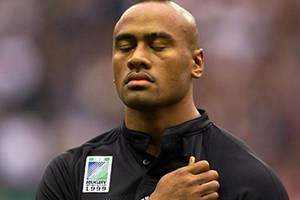
Prisoner’s death: Detective compares Corrections Department to Jonah Lomu

Jonah 2This week the Dunedin coroner, David Crerar, has been holding an inquest into the death of Jai Davis at Otago prison in February 2011 from a suspected drug overdose. It’s taken over three years for the the inquest to start – mainly because for 12 months after Davis died, the police did virtually nothing about it. It looked like a suicide, so they just weren’t interested.

When I heard what had actually happened, I made a complaint to the IPCA about the inadequate police investigation. As a result, Detective Senior Sergeant Colin Blackie was eventually appointed to conduct a more thorough investigation. He did an excellent job. Over 60 Corrections staff were interviewed – including the managers, officers and nurses who were at Otago prison at the time. That took another year.

How Davis died

The circumstances contributing to Davis’ death are complex. But in a nutshell, he was admitted to the prison on Friday, 11 February 2011 when the health centre manager, Jill Thompson, was mysteriously absent from her post. There was no doctor on duty either; there hardly ever is – see Prison deaths linked to Corrections refusal to employ sufficient doctors.

Because Corrections had been monitoring prisoner’s phone calls, both the Police and the Corrections Department were aware Davis was likely to be internally concealing drugs when they brought him in. Davis was put into an ‘At Risk’ cell which has a camera on 24/7. Staff were also supposed to physically check on him every 15 minutes. The checks weren’t carried out properly and over the next two days, Davis became visibly unwell. Although he was seen by half a dozen different nurses during the weekend, not one of them bothered to call the doctor.  Davis died at about 10.00pm on Sunday, 13 February, after the nurses had all gone home.

Once Colin Blackie finished his investigation, senior police at head office analysed the information to determine whether anyone should be charged with a criminal offence – such as “failing to provide the necessaries of life”. That took another six months, but at the end of the day, no one was charged with anything. This week, the coroner was finally able to start the inquest into what went wrong.

Colin BlackieColin Blackie (left) partly blamed the slow start to the investigation. His testimony at the inquest was discussed on RNZ’s Checkpoint programme: ‘Delays into Jai Davis’ death impeded investigation’ (3’ 37”). A brief except follows:

Interviewer: “Emotions were running high as Detective Senior Sergeant Colin Blackie of the CIB told coroner David Crearer a tale of woes at the prison.”

Colin Blackie: “My view after what I believe was a thorough investigation is that over those few days (in February 2011 when Davis died), there was dysfunctionality within the prison. (I believe) that the three pillars of structure, communication and leadership were failing. There was a disconnect between the work groups (prison officers and nurses) and individuals (responsible for looking after Davis).”

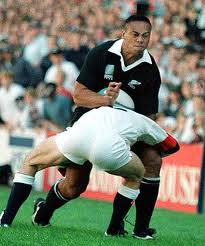
“I use the analogy of five people trying to tackle Jonah Lomu. Everyone falls off and blames the others – and Jonah scores the try. And that’s how I viewed it at the end of this investigation. There was systemic failure by certain people and certain workgroups and no one standing up to be accountable for the treatment and care of Mr Davis.”

Jonah was a juggernaut

JonahThe analogy with Jonah Lomu is valid.  Jonah was a juggernaut – defined as ‘any large, overpowering, destructive force or object’. Once he got going, he was virtually unstoppable. For rugby fans, it was always a joy to see half a dozen guys trying to tackle him at once. He would usually just crash into them, step over the top, and go on to score a try.

The Corrections Department is equally overpowering and destructive – to the extent that in the last 10 years, approximately 90 inmates have died ‘unnatural deaths’ in prison. Most of these deaths are described as suicides. But because prison conditions are so harsh, the suicide rate inside is on average seven times higher than in the suicide rate in the community. In 2011 when 11 prisoners committed suicide – not counting Jai Davis who died after internally concealing drugs – it was 11 times higher.

Despite the fact that most unnatural deaths in prison are ‘suicides’ – neglect or failure to provide medical treatment often contributes to those suicides. See the Southland Times story on the death of Richard Barriball, Prison staff ‘ignored concerns’; or the story about Kerry Joll who had a history of depression but received no treatment in prison and hung himself.

Corrections doesn’t ‘try’ at all

But here’s the real killer. Despite 90 unnatural deaths in our prisons in the last ten years, not one Corrections’ employee has ever been charged with a crime. Why? Because the Department is a juggernaut.  It seems the police haven’t got the guts to tackle a government department that’s bigger than they are – or there’s political interference – and so Corrections gets away with it. But there’s a double standard; police frequently prosecute people in the community who neglect vulnerable family members. See severe neglect leads to prison sentence – except when the victim is a prisoner.

The inquest into the Jai Davis case shows the Corrections Department continues to get away with it – just like Jonah Lomu pushing all opposition aside. The only difference is that Jonah would go on to score a try. When it comes to saving prisoners’ lives, all too often Corrections doesn’t try at all.

When the inquest is finished, the coroner can make all the recommendations he wants. But until the police find the courage to prosecute prison officers and nurses who fail to respond to their duty of care, the Corrections juggernaut will continue steamrolling prisoners into committing suicide.

Police excuse for prisoner’s death – we didn’t read our emails!

Jai Davis died in Otago Correctional Facility (OCF) three years ago after internally concealing drugs in his rectum. In a previous post, it was revealed that prison management’s reluctance to pay $300 to call out a doctor on the weekend was a factor contributing his death. This wasn’t the only factor.  At the coroner’s inquest yesterday, the Police also came under attack – for not reading emails which could have saved Davis’ life.

Corrections had been monitoring phone calls to Davis by gang members in prison. The calls revealed that Davis was about to turn himself into police (on domestic assault charges) and was told to bring in ‘candy’ – code for prescription drugs.

Corrections warnings to police

Corrections intelligence officer Neil Jones-Sexton told the coroner’s inquiry on Monday that this information was of such significance, he immediately warned the police. He made numerous phone calls to a variety of police personnel advising them that Davis was going to present himself at the Dunedin police station to be arrested – and would be internally concealing drugs. He also sent at least two emails to police along with a synopsis of the calls recorded by Corrections.

The evidence given by Mr Jones-Sexton was corroborated by police intelligence analyst, Rennae Flockton who also testified yesterday. She said there were six or seven staff in the Dunedin intelligence office. There was a warrant out for Davis’ arrest and the analysts were all aware and even discussed the possibility that he might turn up at the police station. When he appeared the next day, she and “other Intel staff members” went and “looked at him through the mirrored glass” and “were commenting as to how he may have the drugs hidden on him to take into OCF.”

The Misuse of Drugs Act

Under Section 13 of the Misuse of Drugs Act, the police have the power to detain on belief of internal concealment. Under Section 13C, they have to call a doctor to conduct an internal examination of a detained person which may include an x-ray.  Police detained Davis and held him in police cells overnight. The next day, they took him to court and then out to the Otago prison. During all this time, they never bothered to call a doctor.  They were lucky he didn’t die in the police cells.

Last year I wrote to the IPCA pointing out that the police were well aware that Mr Davis was suspected of internally concealing drugs when he turned himself in. I asked the IPCA to investigate the failure of the police to use their powers under the Misuse of Drugs Act – which could have saved Mr Davis’ life.  On behalf of the IPCA, Inspector Geoff Jago, made a superficial investigation of the police conduct and decided the police were unaware that Davis had drugs on board.

What the IPCA missed

Jago said that Jones-Sexton only sent two emails about the matter – both on Wednesday 9 February (the day before Davis turned himself in). The first email went to Police Detective Sergeant John Hedges who was head of the Organised Crime Squad in Dunedin. Sent at 9.38am, it read: “We are working on a disclosure on the MM (Mongrel Mob) where they are looking to introduce drugs”.  Further on, the email mentions Davis by name.  At the inquiry yesterday, Sergeant Hedges said he never read this email and wouldn’t have done anything about it, even if he had – because he was too busy.

Jones-Sexton sent the second email at 4.00pm that afternoon to Sergeant Tony Ritchie who was head of the Police Intelligence Unit in Dunedin (where Rennae Flockton worked). Apparently, Sergeant Ritchie knocked off work at 2.00pm and claimed he never read the email till he got back to work a few days later – long after Davis had died. Even if this is true, Rennae Flockton said everyone in the police Intel office already knew what was going on – because Jones-Sexton had told them on the phone.

Excuses by Corrections & Police

There’s absolutely no doubt the police knew Davis was carrying drugs when he turned himself in. They displayed the same callous attitude as Corrections – they never called a doctor to conduct an examination. Corrections excuse was they didn’t want to spend $300 to call out the doctor on the weekend. The Police excuse, backed up by the IPCA, is that they didn’t read their emails.

The reality is that Davis died because staff at both Police and Corrections failed to do their jobs properly. When members of the public fail to take care of vulnerable people in their care, they often get charged with manslaughter. Police took three years to finish their investigation into Jai Davis’ death. In the end, they never charged anyone.


Prisoner dies because Corrections reluctant to pay $300 for doctor on weekend

Jai Davis died from a drug overdose two days after being remanded to Otago prison in February 2011. The inquest into his death starts in Dunedin next week – on Monday 24 November, 2014. The hearing is likely to last two weeks and will expose numerous failings by prison management, prison nurses and prison officers who all knew Davis was ‘internally concealing’ drugs but never bothered to call a doctor or an ambulance.

InternalHere’s the background. Knowing he was going to be arrested, Davis tried to smuggle in codeine and benzodiazepines for some other prisoners. Corrections knew he had drugs inside him because they’d been monitoring phone calls from these prisoners asking Davis to bring in some ‘candy’ when he turned himself in.

The police also knew Davis had drugs on board because Corrections told them.  They asked police to keep him away from other prisoners when he appeared in court – in case he tried to pass the drugs on.

Once he was taken to prison, Corrections put Davis in a special ‘dry’ cell for ‘At Risk’ prisoners. These cells don’t have toilets. When the inmate wants to ‘go’, he is given a cardboard potty and is watched while he defecates. Once he’s done, prison officers look though the faeces to see what came out.  Corrections put Davis in one of these observation cells so they could catch him with the drugs and charge him with smuggling in contraband.

Prison manager failed to call doctor

The manager at Otago Correctional facility is Jack Harrison (below). OCFThroughout the two days that Davis was in prison, his team (managers, nurses and prison officers) broke all their own rules.  One of those rules is: “The Management of Prisoners Suspected of Internally Concealing Unauthorised Items”.  It clearly states that prison management is required to “inform a medical officer (a doctor) that the prisoner is being confined to a dry cell”.  The prison manager, Ann Matenga, who was on duty when Davis was admitted signed a form stating she would advise the doctor of the situation. She never did.

On the Sunday morning, two days after he was admitted, Davis was clearly not well. One of the prison officers who was monitoring him subsequently told police:

“The nurse was assessing Davis.  I stood at the cell door while she did this.  Jai (Davis) looked like a corpse, he was grey coloured and was scratching badly – his arms were real red.  His eyes were sunken and he had the cold sweats.  He was definitely not his usual self and he had slurred speech as well.  To my mind, he was showing all the signs of someone being on drugs.  What’s more his breath smelt like faeces.  I could smell it from where I was when he was talking to the nurse.  The nurse said he was fine and that was that.  I thought to myself, I am glad that’s your call, because to me, he looked as though he should have been in hospital.”

Another nurse who was on duty later that afternoon, Janice Horne, also thought Davis was under the influence of drugs. Corrections investigator, David Morrison, wrote: “Her assessment of Mr Davis at this time was that he was under the influence of some drug because of the slow movements that he was making”.   Janice Horne knocked off work at 8.00pm that evening and subsequently told Mr Morrison (and the police) that she saw no reason to call a doctor. She thought Mr Davis was fine, even though he was clearly under the influence of drugs. Davis died two hours later.  There was a camera in the cell recording every movement he made and the last one, the ‘death shake’, was at 10.01pm, two hours after Ms Horne went home. By the time prison officers realised he was dead – at about 5.00am the next morning –  his body was already stiff from rigor mortis.

Life is cheap in Otago prison

Davis was seen by five different nurses over the course of the weekend. They all knew he was in the ‘dry’ cell suspected of internally concealing drugs. Not one of them called the doctor. They didn’t even call the health centre manager. Nurses have a Code of Conduct which requires them, among many other obligations, to “Act promptly if a health consumer’s safety is compromised.” All five nurses responsible for Mr Davis’ health care over the weekend abandoned their ethics and ignored the Code of Conduct.

When the nurses were subsequently interviewed by the police and asked why they didn’t call the doctor, two of them said that cost was a factor. They said that calling the doctor out on the weekend was discouraged because the prison is 45 minutes’ drive from Dunedin where the prison doctor lived and a callout cost $300.  Life is cheap in Otago prison.

Despite so many Corrections staff failing to perform their duties in this case, not one Corrections manager, officer or nurse was charged with a crime. Why? Because the police also knew Davis was internally concealing drugs; with that knowledge, they held him in the police cells overnight and took him to court and then to Otago prison the next day. But they couldn’t be bothered calling a doctor either.  They just chucked Davis in prison. My guess is that the police didn’t want a judge, or the public, to find out that they also contributed to his death.

See also:

Police excuse for prisoner’s death – we didn’t read our emails! 

Severe neglect leads to prison sentence – except when the victim is a prisoner

Prison deaths linked to Corrections refusal to employ sufficient doctors

Corrections cuts crime with the selective use of statistics

In July 2014 the NZ Herald revealed the police have been cooking the crime stats in Papakura. Now The Daily Blog is asking the question: Has the Government manipulated Corrections statistics as well? The answer is yes.  But this is not being done by a few rogue Corrections officers. This is a systemic practice conducted in Corrections head office.

The Department claims it is focused on reducing reoffending and the diagram below taken from its website suggests that in April 2013, re-offending was down by 9.3% over the previous two years. The Department says it is on target to reduce reoffending by 25% by 2017.
When the government announced the goal of 25%, they said: “This will mean 600 fewer prisoners re-imprisoned one year after release, and 4,000 fewer offenders reconvicted within a year of beginning their community-based sentence.”

But the latest Corrections report (2013) on Trends in the Offender Population, effectively contradicts most of the Government’s claims about reduced reoffending.

Prison numbers

The report shows there has been no drop whatsoever in the number of people in prison (see graph).  In fact the number of sentenced prisoners has gone up dramatically – by 166% since 1983.Prison numbers

The best that Corrections could claim about this graph was that “From 2010 there has been a flattening in the sentenced prisoner population.”

Looking at it more closely reveals that the rate of increase also ‘flattened’ between 1983 and 1987; between 1992 and 1995; and between 1999 and 2003. After each of these ‘flatlines’, the muster continued its inexorable rise.

Offenders in the community

In regard to offenders on community-based sentences, the increase has been even more dramatic. The report says: “The number of offenders starting a new community sentence during 1983 was 14,407. This increased by 219 percent, to 48,379, in 2010.”  As with prison numbers, the overall trend is up, not down.Community numbers

But Corrections claims that: “The number of offenders starting a community sentence each year has decreased markedly since 2010. Between December 2011 and December 2013, re-offending has reduced, equating to 11.7% progress towards the target of reduced re-offending by 25 percent by 2017.” (See graph)

Sure, there has been a small drop in the last two years, but it is far too soon to determine whether this is anything other than a temporary dip in the upward trend. The report shows there was a similar drop between 1994 and 2000 – followed by a rapid rise to a new peak in 2010. Corrections’ exaggerated claims about the dip in the last two years are premature; they ignore the long-term upward trend in which the dip may be just a natural variation.

Selective statistics

In fact the dip is not natural. It’s entirely manufactured – by the selective use of flawed statistics.  To make it look like reoffending (by those on community based sentences) is down, Corrections only includes statistics of those who reoffend within 12 months from the start of their sentence, rather than within 12 months from the end of their sentence.  That’s ridiculous.  It’s like measuring the reoffending rate of prisoners while they are still in prison, with almost no capacity to commit further crime. No wonder the reoffending stats are down.

A more useful analogy is to compare reoffending rates with the survival rate of cancer victims. Measuring  survival from the start of chemotherapy or radiation treatment would not tell us much.  It’s only after treatment is complete, assuming the patient survives, that its effectiveness can be evaluated. This is done by measuring survival rates five or even ten years later. 

Short term snapshots

The same applies to criminal reoffending.  The reality that the longer a recidivist offender is at large in the community, the greater the chance he will eventually reoffend. A more detailed analysis conducted by Corrections (Reconviction patterns of released prisoners: A 60-months follow-up analysis) shows that approximately 26% of prisoners reoffend and are re-imprisoned within 12 months of release. But after five years – 52% are back in prison.  In other words, approximately half of all ex-prisoners who subsequently reoffend manage to survive in the community for more than 12 months before they commit another crime and go back to prison. But Corrections is not counting these crimes.

What this means is that the statistical data that Corrections is using to prove it’s on track towards the 25% goal comes from short term snapshots and is therefore incomplete and misleading.  For those on community based sentences the snapshot is so short, it begins at the start of the sentence while the offender may still be on home detention. This is a cynical and deceptive use of statistics which fails to provide an accurate or realistic picture of criminal behaviour in New Zealand.

Severe neglect leads to prison sentence – except when the victim is a prisoner

Joanne QuinnIn November 2011, 82-year-old Maureen Quinn was found malnourished and dehydrated lying on the sofa with maggot infested leg ulcers.  Medical staff said it was the worst case of neglect they had seen and Maureen died six weeks later.  Joanne Quinn (right), her eldest daughter, was charged with failing to provide the necessaries of life and in May 2014 was sentenced to two years and six months in prison.

Here’s another case of neglect which has not received the same level of public attention.  30-year-old Jai Davis was admitted to Otago prison on remand on Friday 11 February, 2011.  He also needed medical help, but he died two days later because prison staff couldn’t be bothered taking him to the hospital.  They never even called a doctor.

The set up

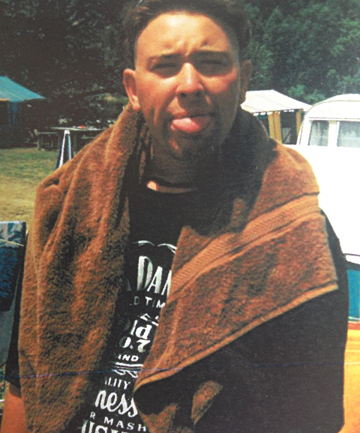
Jai DavisHere’s what happened. Mr Davis (right) was connected with the mongrel mob. and gang members in the Otago prison wanted drugs brought in.  They were aware that Mr Davis had assaulted his girlfriend and was likely to end up in prison again.

So once charges were laid, gang members phoned him telling him to bring in ‘candy’ – and conceal it internally. After a brief appearance in court, Mr Davis was remanded in prison.  Prison management knew he was concealing drugs because they’d been monitoring the gang member’s phone calls. (The Department monitors all phone calls made by prisoners.)

Official procedures ignored

Corrections have a documented procedure for dealing with “prisoners suspected of internally concealing an unauthorised item.”  It requires the prisoner to be taken to a dry cell (one with no toilet or running water) and “a medical officer (the prison doctor) is to be informed”. Davis was remanded late on Friday afternoon so there was no doctor was on duty. Doctors are seldom on duty in New Zealand prisons – see Prison deaths linked to Corrections refusal to employ sufficient doctors.

Because management suspected Mr Davis of concealing drugs, the acting prison manager signed a document stating she would advise the prison doctor of the situation. She never did. Over the course of the weekend, officers and nurses observing Mr Davis noticed him staggering around in his cell apparently under the influence of drugs.

Prison Inspector, David Morrison, subsequently wrote a 39 page report outlining the circumstances which contributed to Mr Davis’s death. He wrote:

“At approximately 16:00 hours (4 p.m. on 13 February, the day he died), Mr Davis was seen by the nurse, who had been informed when she came on duty that Mr Davis was suspected of concealing drugs and that was why he was in the dry cell… Her assessment of Mr Davis at this time was that he was under the influence of some drug because of the slow movements that he was making” (para 171).

“The PM Nurse had a conversation with the unit officer where she stated to the officer, Mr Davis ‘looks stoned’ “ (para 172). Mr Davis was more than stoned. The autopsy report shows he died from the combined effect of ingesting codeine and benzodiazepines.

At about 7.30 that evening one of the officers responsible for observing Mr Davis became concerned about his deteriorating condition. He called the nurse and asked her to come and check on Mr Davis again.  The nurse was about to finish her shift at eight o’clock and replied that she had already seen the ‘little fucker’ earlier in the day. She had a dinner date organised and refused to go. Mr Davis died about three hours later – at 10.30 that evening.

It’s all on camera

Prison cameraBecause he was “at risk” there was a camera in Mr Davis’ cell – everything that happened was recorded.  The camera footage shows that Mr Davis remained on his bed from 10 p.m. that night “without moving”.  In addition to the camera, officers were supposed to personally check on him every 15 minutes.  In his report, the prison inspector said that “the scheduled standard 15 minute observations for 21:32 hours (9:32 p.m.) and 22:25 hours (10:25 p.m.) were not conducted… (But) these observations were recorded as being completed by the officer.”

In other words, around the critical period when Mr Davis stopped moving, the prison officer who was responsible for checking on him failed to do so – and then falsified documents claiming that he had.  See Prison records ‘ghosted’.  It was not until 5.00am that an officer became concerned that Mr Davis didn’t seem to be moving.  When they finally entered his cell to rouse him, rigor mortis had already set in indicating he had been dead for hours. Corrections Inspector David Morrison concluded that at least seven different prison protocols had been breached.

No investigation

Let’s compare Mr Davis’s case with a couple of other cases.  In August 2010, a mother in Auckland was charged with murder but found guilty of manslaughter after her 13-month-old baby drowned in the bath while she left the baby unattended for 15 minutes. She was sentenced to 17 months in prison (on appeal).  In October 2013, a Wellington mother was charged with manslaughter after her baby also drowned in the bath while she made a phone call which lasted 6 minutes.  She was found not guilty.

Each of these women had a vulnerable family member in their care for whom they were responsible.  After a thorough police investigation, they were charged with manslaughter, murder or ‘failing to provide the necessaries’ because in each case they failed to protect the one who died.  In Mr Davis’ case, Otago prison also had a vulnerable person in its care – and also failed to protect him.  But for two whole years the police did absolutely nothing.  An investigation only began after a formal complaint was made to the IPCA.

No one charged

The Police eventually put ten officers on the case and interviewed over 70 Corrections staff – some of whom had gone to Australia.  The investigation took 12 months – but in the end, no one was charged with anything.  According to Radio New Zealand, police claimed “there was ultimately not enough evidence to meet the threshold required to run a successful criminal prosecution”. Yeah right!

There are at least four possible reasons why no one was charged.  The first is that Mr Davis was a prisoner, perceived by the public as a second-class citizen – and prisoners deserve what they get. Maybe that’s why the police took so long to start their investigation.  The second is that a number of people were involved in monitoring Mr Davis over the weekend and no one person was ultimately responsible for his death.  That’s easily solved.  Bring charges against everyone and let the jury decide.

The third possibility is that police were reluctant to press charges because it might have been suggested at trial that they also contributed to Mr Davis’s death – by taking him to prison when they should have taken him directly to hospital.  When she was asked about Mr Davis’ death, the prison health centre manager (who was not on duty the weekend that Mr Davis died) said:

“As there was clear knowledge that this person was concealing drugs, why did he come here in the first place? The prison is 45 minutes away from a hospital. If drugs had exploded in the prisoner’s gut, we would not be able to get (him) to the hospital in time. If there were serious concerns that this man had drugs on board, he should have been held in hospital under guard where he could be treated quickly if things went wrong” (Corrections Inspector’s report para 195).

Political interference?

Anne TolleyThe fourth possibility is that there has been political interference.  Anne Tolley is Minister of Police and Corrections.  She was aware of Mr Davis’s situation at least as far back as Septem- ber 2013.  See Prison deaths investigated.   She and Police Commissioner Peter Marshall took a keen interest in the case and were kept informed of developments by Dunedin Inspector Greg Sparrow who was in charge.

Inspector Sparrow also kept Mr Davis’s mother, Victoria Davis, informed – and Victoria thought that someone at Corrections would eventually be charged. But once the investigation was complete Ms Davis was told that Inspector Greg Sparrow had suddenly gone ‘on leave’. He was replaced by Detective Inspector Steve McGregor who seems to be higher up in the police chain of command. Peter Marshall and Anne Tolley are at the top of the chain.

Given the extraordinary decision that no one will be charged, it may well be that Anne Tolley has also crossed the line and interfered with a police prosecution. After the Judith Collins Oravida scandal and the resignation of Maurice Williamson, the last thing National wants to see is Police prosecuting Corrections over the death of a prisoner a few months out from the election.

All four of these possibilities are worthy of investigation – whether that’s by the coroner, the IPCA or the media.

The big picture

The inquest into Jai Davis’s death will be held from 3rd to 7th November, 2014 – but it seems unlikely the coroner will examine the big picture – despite the fact that Mr Davis’ death in prison is not an isolated case. Over 80 prisoners have died ‘unnatural deaths’ in custody  in the last ten years – but not one prison officer, prison nurse or prison manager has ever been charged with anything. If the police fail to investigate prison deaths, and never press charges against anyone – a conspiracy theorist might conclude that Corrections and the Police are involved in a cover-up.  Eighty dead bodies kept under wraps – the whole thing stinks.

Coroner BainCompare this with deaths in the forestry industry. On average about five forestry workers die every year and companies which fail to protect workers are often ordered to pay significant compensation. Four days ago, Coroner Wallace Bain (right) called the death rate in the forestry industry “alarming” and said “New Zealand’s health and safety record is extremely poor”.  About five prisoners also die unnatural deaths in the care of the Corrections Department every year. In 2011, eleven prisoners died – but no one bats an eyelid. Why? Because they’re only prisoners, so who cares – and no one is really looking anyway, including the police. In Jai Davis’ case, the police eventually did have a look – but then they closed their eyes again.

Alcoholic with 20 convictions for drink driving keeps getting his licence back

PrisonIn February 2014, I was asked to interview Brian Hart, a 58 year old chronic alcoholic on his 20th conviction for drink driving. My job was to figure out how bad his drinking problem was and what treatment he needed. I discovered that as a child he had been physically abused and eventually abandoned by his parents. As a result he had long-standing personality problems. He started drinking at age 16 and by the time I met him, he had been in and out of court for 40 years. In addition to 20 convictions for drink driving, he had over 200 other convictions for a variety of offences and had been sent to prison 33 times.

It was blatantly obvious that Mr Hart had a drinking problem but despite 40 years of court appearances, not one judge had told him to go to rehab.  They just sent him to prison and disqualified him from driving. His offences were all relatively minor so his prison sentences (and his disqualifications) were always quite short – usually 12 months or less. Even in prison he had never been given any help.

When I interviewed him it was very clear that if he was ever going to stop drinking or stop reoffending, he needed to attend a long-term residential treatment programme. I recommended he should go to Moana House for a minimum of 12 months.

Indefinite disqualification

Mr Hart has had a hard life. But the justice system has not only failed to help him, it has also allowed him to continue driving, which affects the rest of us. Because his prison sentences were roughly the same length as his period of disqualification (usually one year), by the time he got out of prison, his disqualification was already over and he was allowed to drive again.  That’s because his disqualification always started the same day he went to prison – not after he got out.

Drunk carAnd that’s not the only loophole in the law.  Currently, the legislation allows drink drivers given a fixed period of disqualification to automatically get their licence back at the end of the disqualification – without being assessed by an alcohol and drug counsellor.  See Legal loophole in drink driving laws. That’s why so many drink drivers – about 10,000 a year – reoffend.

As the law currently stands, the only time a drink driver has to see a clinician to be assessed is if the judge mandates him into treatment or gives him an ‘indefinite’ disqualification.  Mr Hart was disqualified indefinitely for the first time in 2002 – on his 16th conviction for drink-driving. A year or so later (after serving time in prison) he approached an approved alcohol and drug assessment centre hoping to get his licence reinstated.

Mr Hart was required to attend group therapy twice a week and individual counselling once a week to help him stop drinking.  After only four weeks, his clinicians told the NZTA that Mr Hart had completed his ‘treatment’ and should get his driver’s licence back. Bizarre as it seems, the Agency agreed.  They ignored the fact that Mr Hart was an alcoholic with a long history of offending  – and it should be no surprise that he relapsed a few weeks later. Mr Hart has now incurred another four convictions for drink-driving. It’s amazing he hasn’t killed anyone.

Incompetent assessors

drink driving signNew Zealand allows these offenders back on the road far too easily.  The vast majority of the 30,000 Kiwis convicted of drink driving every year are disqualified for a finite period – usually between six and 12 months. They get their licence back at the end of their disqualification with no questions asked – even if they spent the entire time in prison. The only ones that have to undergo an assessment (and treatment if required) to get their licence back are the 1,500 drivers disqualified indefinitely each year. These guys are by definition, high-risk recidivist offenders.

After his indefinite disqualification, Mr Hart was assessed by a doctor and a psychologist – both of whom had an interest in addiction but may have had only limited qualifications and experience in the assessment and treatment of alcoholics.  The fact that they recommended Mr Hart should get his licence back after 16 convictions for drink-driving and a one-month intervention is bewildering. But this kind of incompetence is standard practice. More than half of the 100 clinicians who have been approved to conduct these assessments for NZTA up and down the country are not registered as competent alcohol and drug clinicians. For more on this subject, see Government agencies use ‘incompetent’ counsellors to assess recidivist drink drivers.

The definition of insanity

So what happened to Mr Hart when he appeared in court on his 20th conviction?  Did the judge send him to rehab?  Of course not – he was sent to prison again – for the 34th time.  This is an expensive strategy. As a lifetime offender, Mr Hart has already cost the taxpayer about $3 million. Sending him to prison doesn’t help Mr Hart and, since he keeps getting his licence back, it doesn’t protect society either.

As a repeat drink driver, the worst that might be said about Mr Hart is that he is a ‘bloody idiot’. But it’s not all his fault.  The legislation that allows him – and hundreds of other repeat offenders – to get their licences back so easily is full of loopholes.  Here’s another example: Serious drink-drivers slip through legal loophole. These loopholes need to be blocked.

InsanityBut it’s equally important that judges realise they’ve been perpetuating the problem for years by consistently failing to mandate repeat drink drivers into rehab. Einstein described insanity as “doing the same thing over and over again and expecting a different result”.  Mr Hart might be a bloody idiot.  But the judges who keep sending him to prison thinking that will change his behaviour must surely be insane.

Oravida corruption allegations deleted from Judith Collins wikipedia page

Judith with gun

That’s a Glock police pistol and this is a truely creepy photo for someone who’s supposed to be the Minister of Justice. It’s National’s former straight shooter, Judith Collins, who now seems to have lost her political aim.  She’s doing her best to cover up the identity of  the Chinese government official who attended her now infamous dinner party in China – good luck with that!

But is she also trying to cover up the cover up as well? Her wikipedia page has a Reputation section about her ‘hardball’ manner and ‘take no prisoners’ attitude.  But once Oravida is mentioned, the wikipedia description of events begins to sour.  It talks about her embarrassing public apology for failing to come clean with the media about who she met on her recent trip to China and starts with this brief summary:

“In March 2014, Collins came under fire after an overseas trip where she ‘dropped in’ and endorsed the milk produced by Oravida – a New Zealand company which exports to China – of which her husband is a director. Questioned by Labour politicians and media about a possible conflict of interest, she failed to reveal she had also had lunch and dinner with the chief executive of the company and a Chinese government official. After being admonished by the Prime Minister, Collins apologised and stated that she and the executive were ‘very close personal friends’.Over the following weeks the Labour Party continued asking who the Chinese official was. Collins refused to provide his name, which House speaker David Carter described as ‘very unsatisfactory’.”

This sentence has just been deleted: “It subsequently emerged that Collins travelled 30km in the opposite direction to the airport in order to drop in.”  And the following paragraph, which goes into more detail about the Chinese government official, has been deleted entirely – by an editor calling himself (or herself) ‘Nick-D’. Who could that be?

Collins cluedo

“In April Winston Peters revealed that prior to Ms Collins trip to China, Oravida executives had written to the Government asking it to intervene in the Chinese Government’s strict border control measures after the Fonterra botulism scare in 2013.

In parliament the Labour party wanted to know if the Chinese official she had dinner with worked for the Administration of Quality Supervision, Inspection and Quarantine (AQSIQ) which is responsible for controlling imports into China. Amid on-going accusations of corruption and a conflict of interest from Winston Peters and Grant Robertson, Collins began avoiding the media waiting for her in the halls of parliament. Because her husband is a director of Oravida, she claimed the media were attacking her family but also said the attacks had ‘humanised’ her. She told the Weekend Herald: “I’ve never been seen as someone who was particularly human.”

It looks like Nick-D doesn’t want wiki readers to know that Collins has been ‘humanised’ or accused of corruption – perhaps that wouldn’t do her reputation as a pistol-packing Minister any good.  By the way, Nick-D has a track history; he (or she) is one of the editors who was previously involved in sanitising Wikipedia pages about David Bain, Mark Lundy, Teina Pora, Scott Watson  – and Corruption in New Zealand.  That story was highlighted in this post: Information about corruption and controversial NZ murder cases deleted from Wikipedia.

JudithI suspect we will never know who naughty Nick-D really is.  In July last year, NZ Herald journalist, Phil Taylor, tried to track down another wiki editor calling himself Clarke43 in Justice Minister’s ‘wikispat’: Who is Clarke43?  That Collins supporter removed a passage from her page about the “embarrassing public spat” between her and Canadian judge Ian Binnie – who was responsible for reviewing Bain’s compensation case. Collins clearly did not like Binnie’s conclusions.

Collins was first accused of editing her own page on Wikipedia in this post: Judith Collins’ staff censoring wikipedia articles on justice issues in NZ?  This was after an editor called ‘JC press sec’ (guess who? – now calling herself Polkadot) deleted potentially embarrassing material about her boss.  Collins defended her press secretary’s editing of Wikipedia pages, saying the revisions were minimal and claimed she only removed defamatory material. Despite removing material from wikipedia, the same information about the spat between Collins and Judge Binnie was widely reported in other media – see Minister defends cutting Bain paragraphs on Wikipedia.

Collins seems to have a lot she wants to hide. It’s beginning to look like a great big wiki white wash – all painted over with Oravida milk.

Arthur Taylor subject to cruel inhuman treatment – Ombudsman: chief executive implicated.

Arthur TaylorDuring his current incarceration in Paremoremo, Arthur Taylor has got right up the noses of Corrections officials by repeatedly taking them to court. He asked the High Court to rule that the National Party’s blanket ban on prisoners voting contradicts human rights – which it does according to the European Court of Human Rights. He appealed the smoking ban introduced by Judith Collins – and won the legal battle forcing the Government to change the rules in order to win the war.

Mr Taylor has become something of a ‘prison lawyer’ and for a while was allowed to store his legal files in a separate room. Not surprisingly, Corrections management don’t like him, and in June 2011 he was placed on ‘directed segregation’ after he was allegedly caught with a cell phone in his possession.  (If the Department’s cell blocking technology actually worked – current cost $13 million – Mr Taylor would not have been able to use a cell phone, but that’s another story.)

Directed segregation

IsolationDirected segregation means the prisoner is locked in his cell 23 hours a day and unable to communicate with other prisoners.  According to the Ombudsman, this “allows a prison to restrict or deny a prisoner the opportunity to associate with other prisoners thus reducing any influence or risk that they may present.”  However it may “only be imposed when absolutely necessary to protect the security, good order and safety of the prison, and should only be imposed for the period that such a risk exists.”

Segregation in prison is a punishment of last resort so is usually imposed for only 14 days.  Arthur Taylor was kept in segregation for more than eight months.  He complained to the Ombudsman who took the matter seriously and released a 34 page report titled the “Management of Arthur Taylor at Auckland Prison between 15 June 2011 and 30 April 2012”.

Extensions to 14 day penalty

The prison manager has to have a valid reason to extend a segregation order. So prison Residential Manager, Tony Queree, wrote a memo saying it was “clearly evident that prisoner Taylor has taken excessive advantage of the unit staff efforts to support him in the preparation of his (legal issues). No matter where we place him, he has continually shown that he presents a significant ongoing threat to the security and good order of this institution.”

Bev WakemThe Ombudsman (Beverley Wakem) could find no evidence that Mr Taylor continued to pose a risk to the security of the prison beyond the initial 14 days.  She contradicted Mr Queree’s assertions noting that:

“No incident reports, misconduct paperwork, or file notes were attached to support Mr Queree’s contention that Mr Taylor remained a threat to the security and good order of the prison… Mr Queree did not provide any information which showed the risk remained, and as such, an extension was required.

“The reference to the assistance provided to Mr Taylor for his legal matters does not appear to be valid… as approval had been given by the Department for Mr Taylor to have an office area, and there was a legal obligation for the Department to provide assistance to prisoners for the preparation of legal proceedings.”

Nevertheless, Mr Taylor ended up in continuous segregation for the next eight months – because management regard him as a litigious and difficult prisoner.  Not only was he isolated from other prisoners, for much of the time he was also denied his entitlement to exercise for an hour a day and was allowed only one five minute phone call a week. The Ombudsman was highly critical of virtually every aspect of Mr Taylor’s segregation and said:

“In many cases most, if not all, of Mr Taylor’s rights and entitlements listed on the management plan were restricted despite no risk being identified in relation to those areas… There are no documented reasons for the decision to deny (him) the ability to associate with other prisoners.”

The High Care Unit

NZ prisonAt one point, the prison manager placed Mr Taylor in what is known as the High Care Unit (HCU). This used to be known as the At Risk Unit but these cells were decommissioned years ago because of their run down condition.  At Risk Units are designed to prevent suicidal prisoners from committing suicide and operate in most New Zealand prisons.  They’re more like sensory deprivations cells – with no TV, no radio, nothing to read and no visitors allowed. The inmates hate them.

Putting psychologically vulnerable prisoners into such conditions was criticised by the Ombudsman in the 2011 OPCAT reportbecause the units are focused on custody rather than treatment.”  That report described the detrimental impact on prisoners “who had been detained in at risk units for several months, often in strip conditions, and with limited opportunities to interact with other.”  The Ombudsman has also noted that Corrections uses At Risk cells to ‘manage’ prisoners who will often “drift in and out of the At Risk Unit whether they are at risk of self-harm or not.”  

The Ombudsman was particularly concerned about conditions in the Auckland HCU, as there was no power or running water and nearby lights were left on all night. Leaving the lights on for months on end contributes to sleep deprivation – one of the ‘clean’ torture techniques used by regimes which claim to respect international law and human rights.

The psychological impact

Noting that Mr Taylor was held in these segregated conditions for months on end, the Ombudsman said “Denying a prisoner the ability to associate with other prisoners is a significant restriction to the prisoner’s rights, and can have significant impact on prisoners’ well-being and mental state of mind if the denial of association is for extended periods of time… The placement of Mr Taylor into the HCU, along with the restrictions imposed by the management plan… was more akin to a punishment regime. Further it appears that his placement into the HCU had the effect of exacerbating his behaviour rather than improving it.”

Peter WilliamsThis should come as no surprise. Retired defence lawyer, Peter Williams QC, who has extensive knowledge of prison conditions, discussed the issues in a Herald article: Jail isolation breaks souls and minds. The question is – does this constitute torture?

The Ombudsman seems to think so. In yet another OPCAT report, Monitoring Places of Detention (2013), she wrote:

Segregated prisoners at Auckland and Mt Eden prisons had particularly bad living conditions… Most prisoners placed on directed segregation were not receiving a daily minimum entitlement of one hour in the open air….The lack of appropriate management facilities at Auckland prison… is exacerbated by a lack of stimulation for those held on long-term segregation.

“Accommodation for those prisoners currently undergoing a period of segregation is well below standard and could be considered cruel and inhuman for the purposes of the Convention against Torture.”

Don’t rock the boat

In other words, the Ombudsman specifically describes the treatment of Mr Taylor as a ‘punishment regime’ which  ‘exacerbated’ his behaviour and depicts the segregation cells in Paremoremo  as ‘cruel and inhuman’.  She excuses herself from doing anything about this by putting the words ‘could be considered’ in front of ‘cruel and inhuman’.  What this seems to mean is that until a prison official is actually charged and convicted, it’s a moot point.

But the Ombudsman is not about to rock the boat. If she had been willing to take a more proactive stance, the United Nations and the New Zealand police would have to be notified and then a prosecution could then be initiated against the prison managers and Corrections chief executive, Ray Smith.

Ray SmithMr Smith would be accountable because section 58 of the Corrections Act says the chief executive has to be informed of any directed segregation “and the reasons for it” and a directed segregation can only be extended beyond 14 days if “the chief executive directs that it continue in force”.  Mr Taylor was subject to directed segregation for eight months – which indicates Mr Ray Smith is complicit in his ‘treatment’.

The potential penalties for Mr Smith are serious. The NZ Crimes of Torture Act – which includes cruel and inhuman treatment – says anyone who “conspires with any other person to commit an act of torture” or “is an accessory after the fact to an act of torture” is liable to up to ten years in prison.

Who you’re gonna call?

The reality is that describing what happened to Arthur Taylor and other segregated prisoners as torture – and suggesting the chief executive should be prosecuted, would likely lead to a media frenzy. It would be politically disastrous for the Corrections Department, the National Government and possibly for the Ombudsman.  No wonder she was reluctant to notify the United Nations or the police.

Graham McCreadyIn the absence of a more definitive statement from her, will the police prosecute anybody? I doubt it. So who you’re gonna call?

Graham McCready  of course.

Information about corruption and controversial NZ murder cases deleted from Wikipedia

Wikipedia pages about David Bain, Mark Lundy, Teina Pora, Scott Watson – and Corruption in New Zealand have been ‘neutralised’ by editors with a hidden agenda.

Judith Collins

It all began in July last year, under the headline, Critic claims censorship on Collins Wiki, when the Dominion Post reported that Judith Collins’ press secretary had been involved in editing the Wikipedia page about her boss.  The NZ Herald was more concerned about cuts made by Collins’ secretary to the page about David Bain: Minister defends cutting Bain paragraphs on Wikipedia . Now cuts have been made to the wikipedia pages about Teina Pora, Mark Lundy, Scott Watson and Corruption in New Zealand.

Mark LundyOn the page about Mark Lundy this entirely factual information was deleted: “Lundy continued to maintain his innocence and in June 2013 appealed to the Privy Council in the United Kingdom. Lundy served thirteen years in prison and is now free on bail.”

Scott WatsonOn the page about Scott Watson, someone deleted information about a two masted ketch that was under suspicion at the time of the disappearance of Ben Smart and Olivia Hope, including this statement:  “Former detective Mike Chappell, who worked on the case, later claimed officers had been told not to follow up sightings of the two-masted ketch.”

Information about a key witness in the trial has also been cut. ‘Witness A’, who had been in prison with Watson claimed in court that Watson had admitted the murders.  A Wiki editor then deleted this crucial part of the story: “A year later, witness A contacted the Weekend Herald to say his evidence given under oath was ‘nothing more than an act’. He said he was being threatened by gang members in prison; he was coming up for parole and was put under pressure by police to testify and ‘I agreed on the basis that my life was getting threatened’.”

The IPCA’s criticisms of the police investigation into the Watson case were also removed.

Teina PoraOn the page about Teina Pora, an editor calling himself Clarke43 has removed this: “Assistant Police Commissioner, Malcolm Burgess, said police would continue to cooperate fully with any lawful requests made for information in relation to the case. However, Pora’s lawyer Jonathan Krebs said the police had been unco-operative and for months had been refusing to supply information he had been seeking. Expressing his frustration with the lack of co-operation from police, Krebs said: “(Pora’s) still only in his mid to late 30s, and it’s simply a gross miscarriage of justice.”

A number of editors tried to have Pora’s entire page deleted.

The hidden agenda

When these issues arose last year, the NZ Herald asked Who is Clarke43? and expressed concerns that Wikipedia was being manipulated by certain individuals with a hidden agenda. The Herald asked:

How can Wikipedia users be assured that the fingerprints of interested parties are not all over the online encyclopaedia?”

This is a fair question, all the more pertinent now that substantial cuts have also been made to the page about Corruption in New Zealand.   Information criticising the police for their growing use of illegal search warrants was deleted – including details about the Te Urewera raids, the raid on Kim Dotcom and the illegal tactics used by police in the Red Devils case in Nelson. This quote from an editorial in the NZ Herald was also removed:

Police came under intense scrutiny after a series of high-profile raids in which the courts rejected evidence obtained illegally by police and the Herald criticised their lack of understanding of the law. It said the number of cases involved made it plain that these are not isolated examples of specific operations being botched: there is a systemic problem which must be addressed if the public is to have confidence in the New Zealand Police. Overzealous officers must be reined in to stop their impropriety and apparent disregard for the Bill of Rights.”

It seems that virtually any information which is critical of the New Zealand police or suggests the possibility of a miscarriage of justice is being deleted. This is all in the domain of Justice Minister, Judith Collins, who has already admitted to sanitising the Wikipedia page about David Bain

Is there a hidden agenda underlying the editing of these pages on wikipedia?  I leave the reader to decide – but that will be difficult if the details have been deleted.

The obscene Money money story – as reported by the Waikato Times

The Waikato Times recently printed a story with the headline ‘Obscene amount spent on prison healthcare.’ It said that in 2013, the Corrections Department spent $24 million on  healthcare and the writer, Belinda Feek, said “The spend has left some commentators outraged knowing that offenders would get immediate access to care while many of their victims are forced to wait a number of years.”

Ruth MoneyThe only outraged ‘commentator’ mentioned in the story is Ruth Money (left) of the so-called Sensible Sentencing Trust. Ms Money clearly knows nothing about the availability of medical care in New Zealand prisons – so she made up some nonsense which the Waikato Times then published as if it was true.

Let’s look at a few facts.  The story has only one accurate statement. It quotes Bronwyn Donaldson, the director of offender heath for Corrections, who notes the Department has “a statutory obligation to provide a primary healthcare service to prisoners that is reasonably equivalent to that found in the community.” That ‘fact’ is established by section 75 of the Corrections Act 2004.

The ratio of doctors to prisoners

Everything else in the story is dodgy. In order for there to be any chance of an ‘equivalent’ level of care in prison, key features of the systems need to be similar. For instance the ratio of doctors to prisoners needs to be similar to the ratio of doctors to patients in the community.  But Corrections doesn’t get anywhere near this. In 2010, there were 13,883 full-time general practitioners in New Zealand. This translates to 317 doctors per 100,000 of the population – or one doctor for every 315 people.

The Times story mentions Springhill and Rangipo prisons. Springhill, with 1050 prisoners, has a doctor on duty for only 18 hours a week. That’s a ratio of one full time doctor for 2,333 prisoners. Rangipo, with 540 prisoners, has a doctor on duty for only seven hours a week. That provides a full time equivalent of one doctor for 3,085 patients.  With those ratios, the chance of prisoners getting “immediate access to care” is almost zero. The reality is that one of the most common complaints made by prisoners is that they can’t get to see a doctor when they need to – which sometimes has fatal results. Jai Davis, who was admitted to Otago prison in 2011 suspected of ‘internally concealing’ drugs. He died two days later because there was no doctor on duty and none of the nurses or prison staff bothered to call one.

Pill in mouthCorrections’ discouraged medication policy

In order for prisoners to receive equivalent care, they also have to have access to the same drugs and medications available to the public. But they’re not. Section 6.1.1 of the Department’s medication policy states: “Prescribing medication that can be misused/abused or has some economic value in a prison environment (or example benzodiazepines, opioids and zopiclone) is actively discouraged. A clinically suitable alternative medication or treatment option is preferred.”

Opioids are used for the relief of severe pain. But this ‘discouraged medication policy’ extends well beyond pain relief.  All medications including antidepressants and antipsychotic drugs are taken away from prisoners – usually on their first day in prison –  while the nurse checks with the prisoner’s GP.  Although this practice varies from one prison to another, often such medications are never reinstated. In The Effects of Imprisonment on Inmates’ and their Families’ Health and Wellbeing Dr Michael Roguski, provides numerous case studies which illustrate the suffering this policy causes.  It contributes to depression, anxiety and sometimes to suicide.

Given these deficiencies, it is not surprising that the suicide rate in prison is five to six times higher than the suicide rate in the community. In 2011, so many prisoners killed themselves it was eleven times higher. That’s a fact.

Medical ethics and the Crimes Act

The reality is that denying patients clinically appropriate medication, especially those in severe pain or with mental health disorders, is inhumane and a breach of human rights. If prison doctors follow this policy, they’re breaching their medical ethics which require them to put the welfare of their patients first – rather than arbitrary prison policies. They could even be charged with breaching section 151 of the Crimes Act which requires anyone with vulnerable individuals in their care:  “to provide (those) person(s) with necessaries; and take reasonable steps to protect (those) person(s) from injury.”

The quality of medical care in New Zealand prisons is so poor that in September 2013, Radio New Zealand revealed that the police are investigating the allegations into Jai Davis’ death and are reviewing the suicide of another prisoner.  Richard Barriball had three different medications taken off him as soon as he was remanded in prison in 2010.  He died after being in prison for less than a week. Three former prison doctors interviewed by RNZ are all calling for an inquiry.

Financial comparisons

A final comparison that needs to be made relates to the amount spent on prison healthcare. Ruth Money calls the $24 million spent on prisoners an ‘obscene amount’. But this is less than 2% of the Department’s annual budget of $1.4 billion.  Compare that with the $14 billion which the government spends on healthcare in the community – out of a tax take of $60 billion a year.   That’s 23%. In other words the government spends 11 times more on healthcare in the community than Corrections spends on the healthcare of prisoners.  There are approximately eight times as many full time doctors per patient in the community as there are doctors per prisoner. Now that is obscene. And the Waikato Times let Bronwyn Donaldson get away with saying Corrections provides an equivalent standard of care.  What standard of journalism is that?

Government agencies use ‘incompetent’ counsellors to assess recidivist drink drivers

ImageMore than half the alcohol and drug counsellors used by the Ministry of Health and the New Zealand Transport Authority are not registered as competent with their professional body.

For instance, Steven Brady, is an alcohol and drug counsellor in Christchurch, and has been authorised by the Ministry of Health to conduct alcohol and drug assessments on behalf of the New Zealand Transport Authority (NZTA) for the last 13 years.  The NZTA requires these assessments under section 100 of the Land Transport Act which allows repeat drink drivers who have been disqualified indefinitely to regain their driver’s licence – provided the assessment shows they have their drinking problem under control. If still drinking excessively, the offender may be required to attend treatment before the counsellor will recommend their licence should be reinstated.

Risk assessment

This process goes a step further than what is normally expected of alcohol and drug agencies. As well as diagnosis and treatment, it involves an assessment of the drink driver’s potential risk of relapse; if the risk is low, this will lead to a recommendation to NZTA that the offender’s drinking problem is now ‘cured’ and therefore he should be allowed to drive again.

Assessing the risk posed by recidivist drink drivers is not easy. It takes skill and years of experience – and is akin to the parole board deciding that a prisoner no longer poses an ‘undue risk’ to the community.  Because of the added responsibility involved, only a select number of experienced AOD counsellors are authorised to conduct these assessments; and those who do them are supposed to be vetted by the Ministry of Health (on behalf of the NZTA).

The Ministry has a set of guidelines which establishes the minimum qualifications and requirements to be approved as an assessor for the NZTA. The guidelines were updated in 2007 at which time all assessors had to be registered as ‘competent practitioners’ with their professional body, the Drug & Alcohol Practitioners Association (DAPAANZ).  Registration lasts for 12 months and counsellors have to meet certain performance standards to be reconfirmed as competent each year.

Unregistered assessors

Back to Mr Brady.  It turns out that when the guidelines were updated, he never applied to be registered as a competent practitioner.  Theoretically, from that point on, he was no longer eligible to conduct these assessments.  But he continued doing so because the Ministry of Health never bothered to check whether he had been approved by DAPAANZ or had the necessary qualifications.

Steven Brady is not the only AOD counsellor doing these assessments who is not competent. In resonse to an OIA, the MOH sent me a list of all alcohol and drug counsellors who are currently authorised to do these assessments.  It contained  90 names.  More than half of those on the list are not registered with DAPAANZ as competent practitioners. (DAPAANZ has a list of all alcohol and drug counsellors who are currently registered as competent on its website.)  As a result of my inquiries, the Ministry is now reviewing the guidelines and conducting an audit of all 90 counsellors.

Millions wasted

I also wrote to the NZTA asking how long Mr Brady had been conducting these assessments and how many he had done since he began. In their reply, NZTA said he “was approved by the Ministry of Health as an alcohol and drug assessor in 2000” and that he had been paid for doing 755 assessments since 15 December 2000.

The NZTA pays alcohol and drug counsellors $726 per assessment. If Mr Brady received this for all 755 assessments he conducted, he would have received $548,130 in the last 13 years. That’s a lot of taxpayer funding for someone who does not have the necessary qualifications and is not ‘competent’.  NZTA also advised that Mr Brady was not only conducting assessments in Christchurch where he lived, he was also doing them in Auckland, Nelson, Blenheim, Greymouth, Dunedin and Invercargill.  He seems to have been travelling around the country making a full time living out of this.

Mr Brady probably did more than anyone else but if the other 50 unregistered/incompetent counsellors did 500 assessments each during this 13 years, that’s more than $18 million which has been wasted – all because the MOH failed to vet their skills and qualifications.

On the road again

This has potentially serious consequences. Drink drivers who are disqualified indefinitely are repeat high-risk offenders – the ones with the worst drinking problems and the most likely to end up killing someone.  If alcohol and drug assessments were being done by experienced and suitably qualified professionals, these offenders should re-offend at a much lower rate than those who do not need to be assessed. (Not all drink drivers are disqualified indefinitely. The vast majority are disqualified for a finite period, usually six months to a year and get their licence back at the end of the disqualification with no questions asked.) Image

In fact those who have an assessment (and treatment) re-offend at a higher rate than those who do not. Gerald Waters had a friend killed by Warren John Jenkins (right), a recidivist drink driver with 17 previous convictions. Mr Water’s research  shows that within four years, 32% of assessed/treated drink drivers re-offend while only 28% of unassessed drink drivers re-offend.

What this means is that assessments by unregistered incompetent alcohol and drug counsellors are enabling recidivist drink drivers back on the road to re-offend at a greater rate than drink drivers who receive no assessment or treatment.  By failing to audit the counsellors doing these assessments, the Ministry of Health and the NZTA have wasted millions on a process that fails to keep recidivist offenders off the road and fails to protect the public. Who’s the bloody idiot now?