Advice to Mark Mitchell: only drug courts reduce reoffending

On 5 May, Corrections Minster Mark Mitchell said he wanted to get rid of short prison sentences – because prisoners on long sentences have more access to rehabilitation and reoffend at lower rates. Mitchell has already made new funding available for prisoners on remand. At first glance, the logical approach would be to make rehabilitation available to prisoners on short sentences as well. Let’s analyze this superficial logic.

In response to Mitchell’s ridiculous proposal, Otago University criminology lecturer Fairleigh Gilmour said  “rehab programmes within prisons helped”, but added that “Corrections wasn’t adequately resourced to offer them, so a lot of prisoners missed out.”

Money down the toilet

On the contrary, Corrections is extremely well resourced and has been spending more on rehabilitation every year. In 2016, rehab in prison cost the taxpayer $176 million. By 2024, that had doubled to  $376 million. Despite the taxpayers’ generosity, between 2016 and 2022, the number of prisoners attending rehabilitation programmes declined by two thirds. In effect, Corrections is pouring taxpayers’ money down the toilet.

Labour leader, Chris Hipkins claimed the decline was due to delays in the courts. He suggested offenders spend so much time on remand, that by the time they come up for sentencing, they have already served whatever time the judge intended to impose. So they’re set free –  ‘time served’.  As such, Hipkins said: “they’re not getting access to the rehabilitation programmes that they should be.”

The courts may be slow, but that’s not the real issue. Neither does it matter that so few prisoners attend rehabilitation programmes. The real problem is that these programmes don’t actually work even for those that do attend. However, politicians have been conned into believing they do – so they keep pouring money into them.

Ministerial misinformation

Let’s look at how successive Ministers have supported this wilful waste of resources. Between 2008 and 2011, and again in 2016,  Judith Collins was Corrections Minister under John Key. She said: “this Government is committed to the rehabilitation of prisoners.”

Between 2011 to 2014, Anne Tolley took over. She tried to justify spending millions on new prisons because “modern facilities were necessary to rehabilitate prisoners.”

In 2016, Louise Upston became Minister for 12 months. She said: “my views have changed” and claimed that “a continued focus on the rehabilitation and reintegration needs of prisoners is the best way to turn the tide on the growing prison population.”

Kelvin Davis, Corrections Minister under the Labour government from 2017 to 2023 said “rehabilitation was an incredibly important part of the prison system and essential to giving people the best shot at reintegrating back into society.”

We all know what Mark Mitchell thinks: in addition to wanting longer prison sentences he said “any Government that was serious about public safety would prioritise rehabilitation.”

What doesn’t work

What these Corrections Ministers all fail to understand is that rehabilitation in prison doesn’t work. Their misunderstanding is perpetuated by misinformation put out by Corrections management and other government officials. For instance, Chief executive Jeremy Lightfoot,  claims that “supporting prisoners’ rehabilitation, is an important element of public safety in the long term.” He believes this because Dr Peter Johnston, Director Analysis and Research for the Department claims in the Corrections Journal: “The Department has been achieving very promising gains though these programmes.” These blatent mistruths enable the chief executive to advise whoever the Minister is that in the coming 12 months, more taxpayer money will be required to provide rehabilitation programmes than in the previous year (even though less prisoners are attending).

Unfortunately, Corrections has been supported in these curious claims by the former Ombudsman, Peter Boshier, and former parole board chairman, Sir Ron Young. Throughout his tenure, Boshier made repeated recommendations for Corrections to treat prisoners with humanity and provide more rehabilitation. Ron Young recently complained about the lack of rehabilitation available in prison and said prisoners wouldn’t be released until they “proved they have undertaken work to reduce the risk they pose to society… through a treatment programme.”

More humanity is welcome, but none of these recommendations for more rehabilitation are justified. In 1989, the Roper Report pointed out that politicians and the public held unrealistic expectations, believing that prison programmes could rehabilitate offenders. The Report said the evidence contradicted these misguided beliefs. Nothing has changed since then. In 2023, Corrections’ Annual Report (p.202) listed 8 different prison-based interventions. The average reduction in reoffending was only 3.6%. In the 2024 Annual Report (p.196), the average reduction was even less –  2.3%.

What does work

The only intervention in New Zealand which makes a significant difference to reoffending is the Alcohol and Other Drug Treatment Court (AODTC). There are two such courts in Auckland and one in Hamilton.  Not only does the AODTC reduce reoffending, it even keeps high risk offenders out of prison, saving millions in court, police, prison and health costs.

A Ministry of Justice evaluation in 2019 found the AODTC reduced reoffending of graduates by 86% (p.44). This result is nearly 40 times better than all prison based rehabilitation programmes combined – at a fraction of the cost. So instead of wasting over $350 million a year on prison programmes that don’t work, Mark Mitchell should put $50 million or so into rolling out drug courts. That would keep New Zealanders a lot safer than anything the Corrections Department does.  

Who’s telling the truth – about why so many New Zealanders end up in prison?

Green MP, Tamatha Paul, has been  criticized recently over comments she made about prison food, the presence of police officers on the streets and why people are in prison. As a criminologist, I am more concerned about the latter.

Here’s what she said (in a Tik Tok video on 6 March):the vast majority of people who are in prisons are there for non-violent offences – things that they have had to do as a response to poverty such as stealing food or being dishonest, or they don’t have an address to get community sentencing or bail…”

She added:  “Most of the people that are in prison are there because they suffer from traumatic brain injuries, disabilities, foetal alcohol spectrum disorder, undiagnosed autism, undiagnosed ADHD.  They’re being punished for being disabled, they’re being punished for being poor, for being Maori, they’re being punished for our system that we have in this country.”

Paul was taken to task by Police and Corrections Minister, Mark Mitchell, who described her comments as “total nonsense” and “an insult” to New Zealanders who have been victimised by those in prison. Mitchell seems to have relied on  Corrections Department statistics for December 2024 which state that, out of 10,000 prison inmates, 8.4% of have been convicted of homicide, 20.7% for sexual assault, and 20.5% for acts intended to cause injury.  In other words, almost half (49.6%) of those in prison in December 2024, had committed sexual or violent offences.

The problem is that only 6,000 of these prisoners are actually sentenced. The other 4,000 are on remand, waiting for their cases to slowly work their way through the court system. According to VUW lecturer, Christine McCarthy, half those 4,000 defendants will not end up with a prison sentence – because their offending was not serious enough. So they should not be included in Corrections statistics as violent offenders.

Its just a snapshot

There’s an even bigger problem. The statistics that Mark Mitchell has relied on are a snapshot of prisoners in December 2024.  Murderers, sexual and violent offenders tend to get long sentences, so they make up the bulk of the 6,000 sentenced prisoners on that day.

However, the prison population is very fluid and altogether, about 20,000 people spend time in prison each year. Most are given a sentence of two years or less and are automatically released halfway through their sentence. Potentially, this means around 14,000 Kiwis who spent time in prison during the year are not in prison on the day the snapshot was taken.  They are in and out quickly, so their low-risk offending profiles do not appear in the prison statistics that Mark Mitchell relies on.

What were they thinking?

In 2022, Ian Lambie, the Chief Science Advisor to the Office of Prime Minister published ‘What were they thinking? A discussion paper on brain and behaviour in relation to the justice system in New Zealand.’  Lambie explains in detail that the vast majority of those in prison suffer from brain injuries,  mental health disorders, addictions, neurodiversity, and other conditions like undiagnosed foetal alcohol spectrum disorder, autism or ADHD. They make decisions to drink, take drugs, shoplift and steal, driven by poverty and systemic deprivation – and that’s  why they end up in prison.

So Tamatha Paul was absolutely correct – the vast majority of those who end up in prison have not committed violent offences. Since she made this statement, Ms Paul has been attacked by Mark Mitchell, after which the NZ Herald said she expressed ‘regret’ about making this claim. Clearly, she was bullied by Mr Mitchell – and by the media. He should be the one apologizing – and I sent him an email telling him so.

Misinformation leads to colossal waste of taxpayers’ money

Rehabilitation in prison: numbers attending drops by 75%, while the cost triples

In 2017, 10,400 offenders attended a rehabilitation programme offered by the Corrections Department (see chart below.) This includes offenders in prison plus offenders on community sentences. The cost to the taxpayer that year was $180 million. That’s $17,307 per offender. In 2023, 5,601 offenders attended rehabilitation at a cost of $346 million. That’s $61,774 per offender.

In other words, between 2017 and 2023, the number of offenders attending rehabilitation has halved while the cost per offender has more than trebled.

Number of offenders attending rehabilitation programs each year (and the cost)

Year Number of prisonersNumber of offenders in the communityCost (Millions) from Annual Reports
20177,2003,200 (p.98)$180.8 (p.99)
20186,7662,798 (p.94)$215.7 (p.98)
20194,8064,094 (p. 52)$243.1 (p.87)
20203,7383,199 (p.62)$266.3 (p. 99)
20213,6874,064 (p. 72)$296.8 (p.99)
20222,0862,271 (p. 70)$322.2 (p.113)
20232,6312,970 (p.79)$346.5 (p.198)
2024Not publishedNot published$376.1 (p.182)

The number of prisoners (excluding community based offenders) attending rehabilitation programs has dropped by an even greater margin – to one quarter of the number attending in 2016. See chart below (Corrections figures published by NZ Herald.)

Corrections rehabilitation programs almost totally ineffective

Making matters worse, these programmes have become increasingly ineffective. Every year, Corrections publishes a report describing the extent to which each of its rehabilitation programs reduce reoffending – based on results in the first 12 months after participating prisoners are released. 

In 2017, the Department’s Annual Report listed 13 different prison-based interventions. The average reduction in reoffending across all 13 programmes was only 3.9%. The best performing programme (for Violent Offending) reduced reoffending by 10.4% in the following 12 months. However, very few inmates are referred to this program.

The Annual Report for 2024, shows that Corrections offered only eight programmes in prison. The average reduction in reoffending almost halved to 2.3%. Three of those programs target offenders with addictions – in Drug Treatment Programs (DTP). Rather than reducing reoffending, in 2024 the DTP actually led to an increase (Annual Report, p. 196).

Misinformation published by the Corrections Department

Corrections has a history of publishing grossly exaggerated statements about the effectiveness of its rehabilitation programs in order to persuade whichever Government is in power at the time to continue funding them. For example:

  • “New Zealand remains the only country in the world that routinely measures and reports on the outcomes of the full suite of its rehabilitative interventions. The process has major benefits in enabling us to direct, and re-direct, resources to where we get best effects, to improve effectiveness, and to avoid wasted effort.” Dr Peter Johnston Director Analysis and Research, Department of Corrections.  The New Zealand Corrections Journal, July 2017.

None of these statements published by the Corrections Department are true.

Rehabilitation in the AODTC

The only intervention available in New Zealand which makes a significant difference is the Alcohol and Other Drug Treatment Court (AODTC). Not only does it reduce reoffending, it even keeps high risk offenders out of prison, saving millions in court, police, prison and health costs.

AODTC Judge Lisa Tremewan

There are two such courts in Auckland and one in Hamilton.  Between 2012 and 2018, the AODTC was evaluated more extensively than any other justice related intervention in New Zealand history. The Ministry of Justice found it reduced reoffending of graduates by 86% more than a matched group of offenders.  This result is 86 times better than drug treatment in prison in 2024. Those are the facts.

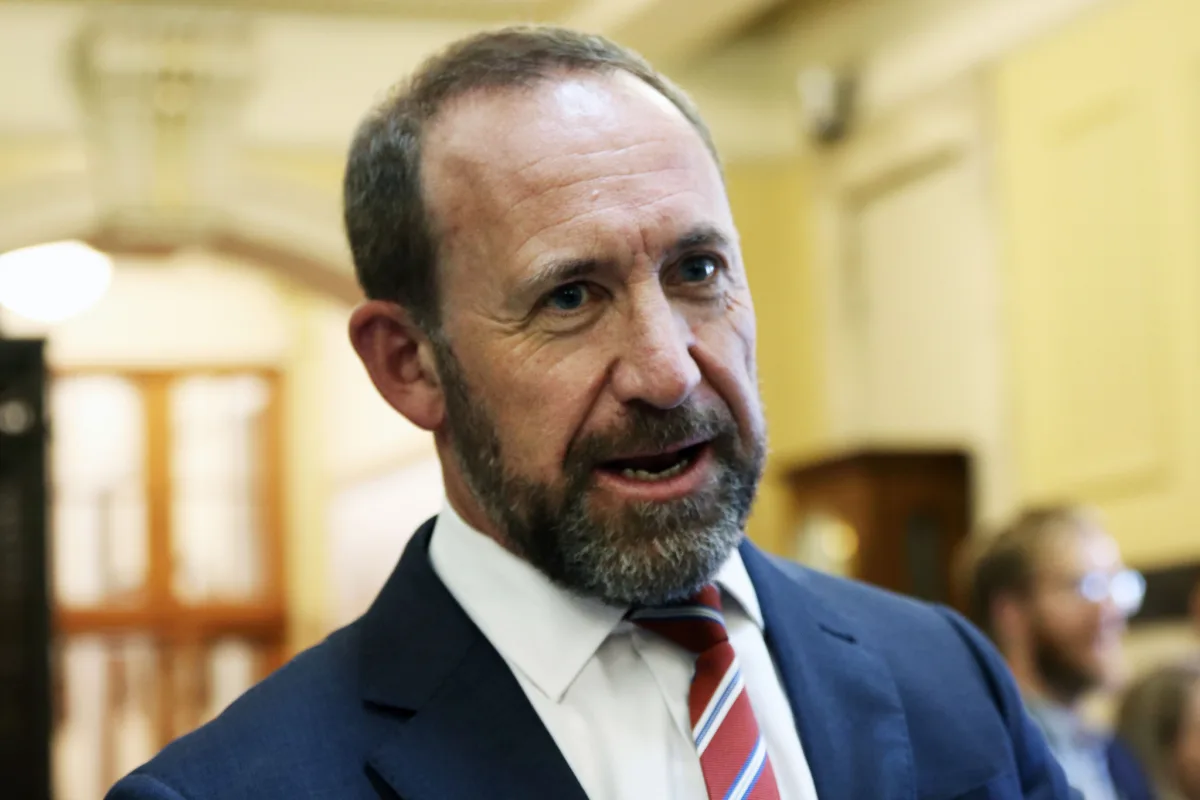
Andrew Little – misled by the MOJ about the true effectiveness of the AODTC

Andrew Little was a member of Parliament when these evaluations were being conducted. In 2017, he became Minister of Justice and was so impressed with the early results, he said drug courts would be rolled out across New Zealand in 2018”.  Each court costs about $3 million a year to operate. But since the drug court was established in Hamilton, no funding has been made available to roll them out anywhere else. Why? Because the Ministry of Justice misled Andrew Little and Cabinet about the remarkable effectiveness of the AODTC, and has consistently lied to Cabinet about the benefits of rehabilitation in prison.

Three strikes law: ‘Ignorant legislation’ or effective justice?

Watch: 1News story 3 April, 2024: Breakfast interview with Roger Brooking and Louise Nicholas

The Government wants to bring back the three strikes sentencing law — but opinion is mixed on whether the legislation contributes to an effective justice system or simply locks more people up for longer.

The law – repealed under Labour in 2022 – imposed a mandatory prison sentence of seven years for individuals who committed a third “strike” or violent offence. The legislation was intended to deter people from serious or repeat offending by threatening increasingly strict sentences.

The Government’s new 36-point “action plan” included working to restore the policy. Advocate Louise Nicholas told Breakfast this morning that victims supported the move. “When the three-strike law was there… our survivors were saying, ‘Good, this needs to happen because we don’t want this person back out in the community reoffending’,” she said. “If this can be a deterrent for that person, [then] for the community, it’s a good thing.”

Ignorant piece of legislation

But criminologist Roger Brooking strongly disagreed. “It’s an ignorant piece of legislation and there’s three good reasons why it just doesn’t work,” he said.

  • “First of all, it doesn’t act as a deterrent.” He said the targeted offenders had “all kinds of mental health issues” or issues related to neurodiversity. The Government’s new 36-point “action plan” includes working to restore the three strikes law.  “They don’t make rational decisions and think about the consequences,” Brooking said. “It does not deter offending.
  • “The second thing is that it removes the judicial discretion of judges. “It turns judges into rubber stamps basically, and I don’t think that’s helpful for justice in New Zealand.”
  • Thirdly, he said the legislation led to “manifestly unjust” outcomes when it was in place, claiming offenders received seven-year sentences with no chance of parole for relatively minor offences.

However, Nicholas said victims want the people that harmed them to get the help they need so communities can be safer. “Not everybody that goes into prison who have committed these serious crimes, have mental health issues, addictions,” she said, disagreeing with Brooking. “Some of them are just normal people, if I can put it that way. “If you’re prepared to harm people, then you’ll be prepared to do the time – and when you come out and you’re gonna do it again, be prepared to go back in and have a longer sentence. “If you’re gonna continuously hurt people then expect to do the time, it’s as simple as that.”

‘Here they go again’

Labour Party deputy leader Carmel Sepuloni criticised the Government’s plan to restore the measure. “Here they go again, recycling policies that have no evidence base and that do not work,” she told Breakfast. “A waste of resource, a waste of time… Clearly there’s no evidence to support this. “We need to be looking at initiatives and policies that actually work to reduce crime. This is not one of them.”

Sepuloni acknowledged that victims needed to be “front and centre” of the response to crime – but said “there are other areas that need investment in them to support our victims and to mitigate the risk of people being victims”.

The coalition government has just sabotaged the entire judiciary

Chief District Court Judge Heemi Taumaunu

An average of 62,000 adults in New Zealand are convicted of a criminal offence each year. Around 7,500 receive a prison sentence. The vast majority of those sent to prison have mental health issues, substance abuse issues, learning disabilities, traumatic brain injuries or other neuro-disabilities.

This means judges need to be well informed about the defendants appearing before them. So says chief district court judge, Heemi Taumaunu.  

In 2020, Taumaunu persuaded the Labour government to roll out a programme called Te Ao Mārama to all 58 district courts in the country.  The plan, described in this guiding document, promises ‘enhanced justice for all’.  It lists eight strategies designed to improve the administration of justice, one of which is to “Improve the quality of information judicial officers receive to inform their decisions.” 

What information is available?

In the main, judges receive four kinds of reports which provide different kinds of information on defendants:

  • pre-sentence reports (PSRs) written by probation officers;
  • mental health assessments written by psychologists or psychiatrists;
  • alcohol and drug assessments written by qualified AOD clinicians; and
  • cultural reports (for which no particular qualification is required). 

In 2022, I conducted research on the availability of these reports for my Criminology honours degree. The topic was:

Court reports: How useful are pre-sentence reports (PSRs), alcohol and drug (AOD) assessments, mental health reports and cultural reports to judges in the sentencing process; to what extent do they lead to meaningful treatment and rehabilitation? 
Clink on the link above for the full report

I interviewed six judges. Here is a brief summary of the results.

Presentence reports

Judges receive about 30,000 PSRs every year. They seldom contain much information. One judge said: “the PSR report is the least helpful piece of information that a judge has for sentencing purposes.”  Another said: “there’s very little that’s of any use in cultural, behavioural, or causative factors in the probation report. Mostly you could do without probation reports – bit of a waste of taxpayers’ money, to be honest”. 

Mental health reports

Mental health reports are generally ordered on the few defendants who may be unfit to stand trial, under section 38 of the Criminal Procedure (Mentally Impaired Persons) Act (CPMIP), 2003.  Judges order section 38 reports on approximately 750 people a year, but expressed concerns that mental health directors are “constantly in touch with us saying that judges are ordering too many reports.  They cannot meet the demand.”  

The few mental health reports that judges receive helps them decide if those particular defendants are insane or not, but these reports don’t address the underlying issues that the vast majority of defendants present with. Only cultural reports and alcohol and drug assessments provide the in-depth background information that judges require. 

Alcohol & drug assessments

In 2009, the Law Commission said up to 80% of defendants who appear in court have issues with substance use. The Corrections Department says 50% of crime is committed by people under the influence of drugs or alcohol. This suggests that judges should receive alcohol and drug assessments on at least half of the 60,000 defendants appearing in court each year.

However, up till now, funding for comprehensive alcohol and drug assessments has only been available in three locations in New Zealand: Auckland, Wellington and Nelson.  In Auckland and Nelson, they’re funded by the Ministry of health.  In Wellington they’re funded by the Ministry of Justice.  In 2021, this allowed AOD assessments to be conducted on about 1,000 defendants in these three cities. 

However, the Nelson funding is coming to an end.  That leaves Auckland and Wellington as the only two cities in the country where a funding mechanism is in place to provide AOD assessments.  The only way judges can access AOD reports in the other 56 district courts around the country is if lawyers request them on legal aid.  In 2021, only 176 assessments were funded in this way. 

Cultural reports

Minister of Justice Paul Goldsmith

Lawyers have been much keener on requesting cultural reports. According to Justice Minister, Paul Goldsmith, 2,500 cultural reports were prepared for judges in 2023 paid for by legal aid – at a cost of $7.5 million. In March 2024, the coalition government followed through on its commitment to abolish the funding.

Most commentators described this as a retrograde step. Social justice advocate, Emily Rakete, says: “There is no fiscal argument for ending cultural report funding – they pay for themselves by reducing state spending on incarceration.”

The Law Society is concerned that access to justice will be impacted by abolishing the funding – with the greatest impact on Maori who are vastly over-represented in the justice system. Criminologist, Dr Juan Tauri, says it’s not just Maori who benefit from cultural reports; they help the working class and anyone who is poor which includes Pākehā, as well as Māori and Pasifika.

Retired Judge David Harvey

Retired district court judge David Harvey points out that judges also have an obligation under the principles of the Sentencing Act to consider relevant background factors, so they will have to try and obtain this information from other sources. However, Associate Law Professor, Khylee Quince, claims these reports “provide essential information to judges that they cannot get from other sources.”

Unfortunately, she’s right.  Judges already receive pathetically few mental health or AOD reports. Now the coalition government has just shot down the Chief Justice’s brand new plan for judges to be well-informed about the defendants appearing before them. Talk about blind justice…

Rehab in the AODTC or rehab in prison. It’s not rocket science…

According to the NZ Herald, a lawyer, a judge and the chairman of the Parole Board, claim the Corrections Department is ‘failing prisoners’ due to a shortage of rehabilitation programmes in prison.  The story highlights the case of Blake Hollins-Apiata – a 19-year-old who has been sent to prison twice for violent offending associated with excessive drinking and drug use.  The parole board refused to release him early because he has been unable to attend any rehabilitation programmes in prison. 

Hollins-Apiata’s lawyer, Julian Hannam, said the case was not uncommon as many inmates were not getting assistance in prison, which often meant they lost hope and motivation.  At Hollins-Apiata’s sentencing, even Judge Hikaka criticized Corrections for the delay the teen had experienced getting into a treatment programme. The Parole Board chimed in saying it was “fundamentally wrong” that Hollins-Apiata has been stalled within the prison system.

The reality is that thousands of prisoners struggle to get into programs. Former Corrections Minister, Kelvin Davis, said the problem was due to staffing challenges faced by the Department.  The number of inmates able to attend rehabilitation programs provided by Corrections has dropped by two thirds in the last five years.  In the 12 months prior to June 2016, 8,372 prisoners attended rehabilitation. By June 2019, the number had fallen to 4,806.  Covid 19 lockdowns played a part in this process, as no one was allowed into prisons, including lawyers and programme providers. But since the pandemic ended, the situation has got even worse. The number of prisoners attending rehabilitation has now dropped to 2,086 in the 12 months to June 2022. 

Graph showing the decline in prison inmates attending rehabilitation programmes

Rehab in prison is ineffective

There is no doubt this young man needs to attend rehabilitation as soon as possible. But the perception that rehabilitation in prison would make any difference is fundamentally misguided.  This is why.  Hollins-Apiata’s offending is alcohol and drug related. Corrections offers addiction treatment in prison in its Drug Treatment Programs (DTP).  But this programme is almost totally ineffective. In 2020/21 drug treatment in prison reduced reconvictions by only 2.2% and reimprisonment by 0.6%.[1] In 2021/22, these figures were 3.15% for reconviction and 0.35% for reimprisonment.[2] These are tiny reductions which only occur in the first 12 months after release from prison.

The problem is not confined to addiction treatment.  In 2021, the Corrections Department’s Annual Report listed 23 different prison-based interventions intended to reduce reoffending.[3] Corrections assesses the impact of all these programmes in the first 12 months after the prisoners who engaged in them are released. In 2021, the average reduction in reoffending across all 23 programmes was only 2.3%.

In other words, the prison-based rehabilitation programs offered by the Corrections Department do not change behaviour. Despite the fact that these programmes have very little impact on reoffending rates, in 2022, the Department spent $322 million on them.[4]

The AODTC is incredibly effective

There is one rehabilitation strategy that does reduce recidivism – drug courts. There are two such courts in Auckland (known as the AODTC or Alcohol and Other Drug Treatment Court), and a third one in Hamilton.  To be eligible, defendants have to be facing a prison sentence of up to three years and plead guilty. Each court takes a maximum of 50 participants at any one time and processes about 120 participants a year.  The graduation rate is 46%. In each court, that amounts to about 55 graduates a year who get treatment and avoid going to prison.

Between 2012 and 2018, the AODTC was evaluated more extensively than any other justice related intervention in New Zealand history. The Ministry of Justice found it reduced reoffending by 45% (by 86% for graduates). In other words, the AODTC is 15 times more effective at reducing reoffending than the 3% reduction achieved by drug treatment in prison.

What about the cost?

The Ministry says the cost of treatment in the AODTC was $14.46 million over four years.  That’s $3.6 million a year. So, if the $322 million spent on prison interventions was spent on drug courts instead, potentially, that would fund 89 new drug courts around the country.  I don’t think we need 89 new courts. Let’s say, we set up 20 new drug courts.

Each court processes approximately 100 defendants a year and nearly half of them graduate. So with 20 courts, that would allow around 1,000 defendants a year to avoid going to prison. Since it costs $150,000 to keep one person in prison for one year, that’s a potential saving of $150 million a year.  After a couple of years, New Zealand could close a few prisons. And then we wouldn’t have to waste $322 million on prison-based rehabilitation programmes that don’t work. That would be an additional savings.

This is not rocket science. It’s common sense – based on the evidence from the Ministry of Justice about what actually works to reduce reoffending.  So instead of blaming the Corrections Department for not providing enough rehabilitation programmes in prison, Government needs to spend taxpayers’ money on programmes which actually work. We need to fund and expand the use of drug courts in New Zealand.


[1]    Corrections Annual Report, 2020/21, p.169.

[2]    Corrections Annual Report, 2021/22, p. 181.

[3]    Corrections Department Annual Report 2020/21, p.169.

[4]    Corrections Annual Report, 2021/22, p. 113.

The election is over – won by the Corrections Department

Prior to 2017, New Zealand’s prisons were bursting at the seams – and Governments were building a new one virtually every year.  Prisons are expensive. So Andrew Little, the newly elected Minister of Justice at the time announced that Labour would reduce the prison population by 30% over the next 15 years. They achieved it in five.

When Labour took office, there were over 10,500 Kiwis in prison. At the start of 2022, the muster had fallen to about 7,500 – a drop of 28%. Since then, the numbers have gone up again and, in June 2023, reached 8,610. Overall, this is an 18% reduction during Labour’s six years in office.

In December 2022, the Justice Sector released a 124 page document, titled Imprisonment in New Zealand: Long-Term Insights On Imprisonment, 1960 TO 2050. It explains some of the factors which led to this remarkable drop in the prison population.

There are two kinds of prisoners: those who have been sentenced and those who have not – known as prisoners on remand. Judges may remand a defendant into prison if they think he or she poses a risk of further offending, or if the offender simply has nowhere to live if granted bail.

The document claims that the prison population began to decline in 2018.  Between June 2018 and June 2022, the number of sentenced prisoners fell by 37% from 7,230 to 4,590.  According to the justice sector, three factors have contributed to this decline.

The drop in sentenced prisoners

  • There was a change in sentencing patterns following the introduction of the Sentencing Act in 2017.  The changes enabled judges to make greater use of intensive supervision which enables offenders to access treatment in the community, and avoid the disruption to relationships, employment, and housing that goes with short prison sentences.  Judges were able to order defendants to be drug tested and to impose conditions requiring abstinence from alcohol and drugs. More electronic monitoring options also became available to support the enforcement of conditions.
  • There was, and still is, a growing backlog of cases in the courts which began prior to the COVID 19 pandemic, but which was compounded by the pandemic.  Much of the backlog relates to defendants pleading not guilty when facing serious charges.  Between 30 June 2018 and 30 June 2022, the number of cases waiting trial involving serious violence increased by 90%.  In the same period, offences for Class A drug dealing increased by 48%.  While these defendants wait for their case to proceed, some may be remanded in prison, but many are not. This also slowed down the number of people being sent to prison.
  • Then in 2019, the Court of Appeal changed sentencing guidelines related to class A drugs.  The new guidelines allow for more lenient sentences to be imposed if the judge determines that addiction played a part in a drug dealer’s offending. Since the new guideline was issued, people convicted of dealing in Class A drugs have been less likely to be imprisoned or have received shorter sentences. The imprisonment rate for methamphetamine dealing fell from 68% to 47%, and average sentence lengths reduced from four years, four months to three years, six months. This also reduced the number of Class A drug offenders in prison.

The drop in remand prisoners

The decline in the remand population began in 2020, but was driven by a different set of factors.

  • The drop in the number of prisoners on remand was largely caused by the Covid 19 lockdown in April 2020.  Because virtually everything closed down, there was an immediate drop in the number of people being prosecuted in court. Judges had less interactions in court and so focused on sentencing offenders who were already on remand. They sentenced them to prison or to a community-based sentence.  Both options reduced the total number of prisoners on remand.
  • For those on bail in the community, successive lockdowns in Auckland, reduced their opportunities to commit further crime.  This meant they were less likely to breach bail and end up in prison.  In 2021, the number of defendants who committed breaches decreased by 13%, which also contributed to the drop in prisoners on remand.
  • The Corrections Department also contributed to the drop in prisoners on remand by establishing bail houses and assisting offenders into them.  70% of those in prison struggle with literacy.  Corrections created a Bail Support Service and appointed Bail Officers to help prisoners on remand with the paperwork. Bail officers also liaise with defence counsel and try to get the defendant’s bail application before a judge within a week. This has helped to cut the amount of time that prisoners spend on remand.

The 2023 election was held this week. National and ACT will be in charge, perhaps with ‘help’ from Winston Peters. Before the election, they were all talking tough on crime. The prison population is likely to skyrocket again – at substantial cost to the taxpayer.

There’s only one strategy that’s really tough on crime – drug courts. But politicians generally prefer to lock people up. So in the never-ending competition for Government funding – between punishment in prison or rehabilitation in the community – the Corrections Department wins again.

How to be really tough on crime

According to Tova O’Brien, politicians became obsessed with fighting crime in the 2023 election. National said it wanted to re-establish boot camps for 10 to 17-year-olds. ACT wanted to put 17 year olds into prison. NZ First wanted to crack down on gangs. Labour wanted to fund another 300 frontline police officers so they could lock more people up.  These are all tired, old law-and-order policies based on fear mongering – basically lock ‘em up and throw away the key approaches.

Law and order comes up for auction at just about every election, whereby the main political parties compete to be the toughest on criminal offenders.  Criminologist, Prof John Pratt referred to this competition as penal populism.  Over the last 20 years or more, tough on crime policies have put so many people in prison that New Zealand had one of the highest rates of imprisonment in the Western world. The so-called Sensible Sentencing Trust played a huge role in this as politicians turned to uninformed farmers like Garth McVicar, instead of academics that actually understood something about the causes of crime.

This lock ‘em up approach is based on a theory – or rather an assumption – known as deterrence.  The idea is that the fear of being incarcerated, will deter people from committing crime; and having been sent to prison will deter you from further offending.

New Zealand’s recidivism rates provide ample proof that this theory doesn’t work. Incarceration takes offenders off the streets temporarily, but just about everyone gets released eventually.  In the meantime, being forced to hang out with other hardened criminals means that prisons are more likely to be universities for crime.

What doesn’t work?

Any policy designed to reduce crime in society needs two key components.  First, it needs to target the underlying causes or drivers of crime, rather than just taking offenders off the street.  Second, there needs to be solid evidence that the policy actually works. 

So what about providing more rehabilitation in prison? Both National and ACT have succumbed to this unenlightened approach.  National is proposing to improve access to rehabilitation programmes for prisoners held on remand, while ACT’s law and order policy is to make it mandatory to attend rehabilitation programmes in order to be eligible for parole.

Unfortunately, Corrections annual reports show that prison-based rehabilitation programs are almost totally ineffective. Most crime is either committed under the influence of alcohol or drugs or committed to obtain money to feed a drug habit. Corrections is well aware of this, and provides drug treatment programmes in prison. However, in 2020/21, drug treatment in prison reduced subsequent reconviction rates by only 2.2%.  In 2021/22, the figure was 3.15%. These are tiny reductions which only occur in the first 12 months after release from prison. 

In 2021, the Corrections Department’s Annual Report listed 23 different prison-based interventions intended to reduce recidivism. Corrections assesses the impact of all these programmes in the first 12 months after the prisoners are released. In 2021, the average reduction in reoffending across all 23 programmes was only 2.3%. The best performing programme (prison-based employment) reduced reoffending by 4.3%.

Despite the fact that these programmes have very little impact on reoffending rates, in 2022, the Department spent $322 million on them.

New Zealand is not the only country that has struggled with this. Worldwide, the history of trying to rehabilitate criminal offenders has been so fraught with failure that for many years, criminologists and justice officials used to believe that “nothing works”.

What does work?

There is one policy that does work – drug courts. There are two such courts in Auckland (known as the AODTC or Alcohol and Other Drug Treatment Court).  Between 2012 and 2018, the AODTC was evaluated more extensively than any other justice related intervention in New Zealand history. The Ministry of Justice found it reduces reoffending of graduates by 86% more than a matched group of offenders.  This result is 28 times better than the 3% reduction achieved by drug treatment in prison. That’s the evidence.

Andrew Little was a member of Parliament when these evaluations were being conducted. In 2017, he became Minister of Justice and was so impressed with the early results, he said drug courts would be rolled out across New Zealand in 2018”.  One extra drug court has been established in Hamilton, but since then, no funding has been made available to roll them out anywhere else.

Given the overwhelming evidence that drug courts are more effective at reducing reoffending than any other intervention, if politicians want to be really tough on crime, rolling out more drug courts is the only evidenced-based policy available. So far, The Opportunities Party is the only party that has read the evidence and made this part of their platform. TOP seem unlikely to be represented in parliament, but at the moment, they are the only political party prepared to be really tough on crime.

Its easier to get addiction treatment in prison than in the community


The information in this article is taken from a 6,000 word research assignment: ‘Identify the Challenges facing the New Zealand Alcohol & Other Drug Court (AODTC)’ prepared for my Honours degree in Criminology at VUW.

The prison population has dropped by over 2,000 since the Labour coalition came to power in 2018. Nevertheless, the ‘tough on crime’ mantra espoused by political parties of virtually every persuasion has driven the prison population to record highs. In March 2018, the muster reached 10,820.  In the last 20 years, this pressure – known as penal populism – has forced successive governments to build six new prisons. It has pushed Corrections’ costs from $361m in 1997 to $2.4 billion in 2020 ($1,843 million in operating expenses plus $603 million in capital expenses). That’s a six-fold increase over 20 years.

Whichever political party has been in power, the Corrections Minister at the time has then claimed his Department had a responsibility to rehabilitate these extra inmates. In 2012, the National Government ratified this responsibility announcing that Corrections had to reduce reoffending by 25%. 

The demand to rehabilitate these inmates has enabled the number of prisoners accessing addiction treatment in prison to jump from 174 a year in 2005 to 500 in 2008, and then to 1,000 in 2011. In the 2019 ‘Wellbeing’ budget, Corrections Minister, Kelvin Davis, announced even more funding would be made available enabling 1,200 inmates to attend prison based treatment. That’s a seven-fold increase.

Corrections provides addiction treatment via intensive Drug Treatment Programmes (DTP) in nine of its 18 prisons. The Department claims these programmes have “delivered a consistently positive reduction in reimprisonment, though typically modest in scale”.  Modest is right. Corrections’ Annual Reports show these programmes reduce reoffending by only 5% in the first year after release. In 2015, the figure was 4.8%; in 2021, it was less than 1%. 

Addicts dying on waiting lists

While prison programmes have expanded exponentially, the availability of addiction treatment in the community has contracted – bearing in mind, addiction services receive only 11%  of total public expenditure on mental health and addiction services.  In 2005, the NZ Herald reported that, due to years of underfunding, so many treatment centres in New Zealand had closed, the number of residential beds in the community had more than halved. The headline read: Addicts ‘dying’ on waiting lists.

In 2019, the National Committee for Addiction Treatment reported that 150,000 New Zealanders experience problems with substance use every year, but less than one third can access help.  In some parts of the country, addicts wait up to six months for treatment.  The same year, the Drug Foundation said: “strict criteria, long waiting lists, difficult locations and unsuitable services all prevent people from accessing help” and called for funding for addiction services to be doubled from the current figure of $150 million a year.

In other words, penal populism has given the Minister of Corrections more influence over government spending on addiction treatment than the Minister of Health, such that it is now easier to get substance abuse treatment in prison than in the community.  This is a travesty when you consider that prison programmes reduce reoffending by only 5%, while the drug court in Auckland (known as the AODTC) achieves a 54% reduction in reoffending in the 12 months after treatment. In other words, the drug court is 10 times more effective than drug treatment in prison.

The MOJ’s flawed cost-benefit analysis

Given their effectiveness, it’s strange the Government seems so reluctant to roll them out nationwide.  It was only in 2019 that former Justice Minister, Andrew Little, agreed to establish a new one – in Hamilton.  In October 2020, the Government announced another one would be set up in Hawkes Bay.  Before making a decision to expand, Mr Little ordered the MOJ to conduct a cost benefit analysis of the AODTC. This was completed in June 2019 and claims the AODTC provides very marginal savings (returning $1.33 for every $1 in cost).

Unfortunately, the Ministry’s analysis is seriously flawed. To begin with, it compared the cost of running a drug court with the cost of a traditional court even though these serve entirely different purposes – one to treat and heal, the other to punish.  It would have made more sense, and been a great deal more informative, to compare the cost of treatment in drug court with the cost of drug treatment in prison – where the purpose is the same: to reduce drug related offending and keep drug addicted defendants out of prison.

The MOJ also failed to take long term benefits into account. For example, their analysis claimed the savings achieved by one defendant in the AODTC avoiding prison for 12 months was only $12,847. Based on this figure (which applied to 220 graduates), total savings to the taxpayer were only $3.32 million.  The MOJ appears to have used the $12,847 figure because the total number of offenders going through the AODTC, and avoiding prison is so small, it has negligible impact on Corrections’ operational costs.

The crux of the problem is that the AODTC only deals with 100 offenders at a time, leading to a very limited number of graduates who manage to avoid a prison sentence. But if ten or twenty times that number were put through drug courts, economies of scale would kick in, and hundreds would stay out of prison. Corrections could lay off staff and possibly close a prison. The resultant savings would have a huge impact on the cost benefit ratio. Unfortunately, the Ministry failed to take into account the cost savings that would accrue if sufficient drug courts were established such that they actually led to a drop in the prison population. On this basis, they mistakenly concluded that the financial benefits from the AODTC are marginal.

Who is Andrew Little listening to?

In summary, the prison population has exploded due to penal populism – which, in simple terms, is the result of politicians listening too closely to the ‘lock ‘em up’ brigade.  Cabinet then listened to every Minister of Corrections, each of whom argued for more drug treatment in the new prisons they were building. More recently, as Minister of Justice, Andrew Little commissioned a flawed cost-benefit analysis from his own Ministry – the same Ministry that produced projections claiming we needed more and more prisons.

Now that he’s Minister of Health, let’s see if Mr Little is willing to listen to health professionals and treatment providers and request an independent cost-benefit analysis of the AODTC – one that compares the benefits of addiction treatment in the community with treatment in prison. And let’s see if that analysis takes a long-term view, preferably one that covers 15 years, which is how long Mr Little said it would take to reduce the prison population by 30%.  Without that, sooner or later, we’ll be back to building more prisons.

Why the Auckland drug court failed to reduce the prison population

The information in this article is taken from a 6,000 word research assignment: ‘Identify the Challenges facing the New Zealand Alcohol & Other Drug Court (AODTC)’ prepared for my Honours degree in Criminology at VUW.

Former Justice Minister Andrew Little

In 2018, former Justice Minister, Andrew Little, announced the Labour-led Government wanted to reduce the prison population by 30% over the next 15 years.  At the time, the muster had surged past 10,000. We were locking up so many people that, at the rate we were going, Little said the country would need to build a new prison every two or three years. Although the 30% goal was clear, how Mr Little and his Labour colleagues intended to achieve it was not.

One piece of legislation contributing to the problem is the Bail Amendment Act, passed in 2013, in response to the murder of Christie Marceau. This more than doubled the number of offenders held in prison on remand.  Repealing this onerous law, which according to some authorities breaches human rights, would bring the muster down.  Although Labour now has an unencumbered mandate, so far, the new Minister of Justice, Kris Faafoi, has had little to say other than offer platitudes about the need for “dispassionate and evidence-based examinations of ‘adverse events’.”  Another strategy bandied about by Andrew Little in 2018 was to expand the use drug courts –  designed to keep recidivist, high risk offenders, whose crimes are driven by alcohol and/or drug addictions, out of prison. 

The first drug courts were set up in 2012 by the National Government. One was started in Waitakere, the other in Auckland. Together, they were known as the Alcohol and Other Drug Treatment Court or the AODTC. To get into the AODTC, offenders have to commit a crime serious enough to warrant up to three years in prison – assuming they were sentenced in the usual way in the district court.  But in the drug court, they are ‘sentenced’ to treatment rather than to prison. This could involve residential rehabilitation, mental health treatment, anger management, or any other counselling and support the judge and the treatment team deem appropriate.

The process takes up to 18 months. Participants come back to court on a regular basis so the judge can monitor their response to treatment and their compliance with drug testing to ensure they remain abstinent. The process is so intensive, the AODTC can only handle 100 participants at a time.

Drug courts 10 times more effective than treatment in prison

Internationally, drug courts are one of the most effective interventions available to reduce reoffending. The two drug courts in Auckland are no exception. Since the pilot was established in 2012, 46% of participants have graduated (see Alcohol and Other Drug Treatment Court quantitative outcomes evaluation 2018–19). Graduates are 62% less likely to reoffend and 71% less likely to return to prison in the first 12 months after treatment. When non-graduates are included in the analysis, 54% (of participants overall) are less likely to reoffend and 58% less likely to go back to prison. Compare those figures with addiction treatment in prison which reduces reoffending by only 5% in the year after release.  It means the drug court in Auckland is up to 10 times more effective at reducing reoffending than treatment in prison.   

Unfortunately, this has no impact on the prison population. That’s because the AODTC only takes 100 participants at any one time. The 46% that graduated is made up of only 220 offenders who stayed out of prison over the six years the pilot was running – an average of 37 less prisoners each year. Given that New Zealand has been incarcerating up to 10,000 people, 37 less is a mere drop in the bucket. That doesn’t enable the Corrections Department to lay off any staff, let alone close a prison.

In order to have any impact on the prison population, we would need many more such courts and would need to keep hundreds of offenders out of prison. Unfortunately, the Government has been extremely reluctant to roll drug courts out nationwide.

The target group

Clearly, there is no shortage of potential drug court candidates. According to Corrections, the vast majority of prisoners have alcohol and drug/and or mental health problems;  42% are assessed with a moderate to high risk of re-offending, which is the target group the drug court is designed to tackle. That’s around 3,500 inmates who could benefit from addiction treatment in a drug court. If 46% graduated, the prison population would be reduced by about 1,600. The Government would be well on its way towards reducing the muster by 30%. We could even close a prison.

Since it costs $120,000 to keep one person in prison for 12 months, this would lead to substantial savings to the taxpayer. With 1,600 less prisoners, the savings would be in the vicinity of $192 million a year. After five years, that’s nearly $1 billion.

Despite the extraordinary effectiveness of the AODTC pilot, former Justice Minister Andrew Little announced that only two new drug courts would be established – in Hamilton and Hawkes Bay. That may keep another 50 or 60 offenders out of prison.  But it won’t make any difference to the prison population, and it won’t lead to any savings.

This begs the question: Why is the Government so reluctant to roll drug court out nationwide? The short answer is that Andrew Little, has been listening to the wrong people. This link takes the reader to a fuller explanation.

How the lockdown unlocked 800 prisoners

Since the Labour led coalition came to power, the prison population has dropped from a peak of 10,820 in March 2018 to 8,521 in December 2020. That’s a drop of over 20% in less than three years – well on the way towards the target of 30% promised by Andrew Little – which he said would take 15 years.

It’s not entirely clear how this reduction has been achieved. In response to an OIA on this issue, in September this year, Corrections replied:

“The reduction in the prison population is a multi-agency effort that spans the criminal justice system. Determining the cause of a decrease in the prison population is a complex exercise.”  

The lockdown imposed by the Government slowed the use of remand by judges

However, the Ministry of Justice gives most of the credit to the coronavirus lockdown. MOJ spokesperson, Anton Youngman, told Stuff the remand population dropped by about 800 during alert level 4. It seems even crims were afraid of catching Covid-19 and stayed home.  Less crime was committed and many court hearings were postponed, so judges had little opportunity to remand offenders in prison. Even under alert level 1, judges were aware of the risk of infection in prison and more people were remanded on bail instead of into custody, compared with before Covid-19.

Time moves on. The borders are still closed but, for most of us (in New Zealand anyway), things are back to normal – which means everyone is free to commit as much crime as they used to. So when offenders are arrested, and the judge thinks they pose an on-going risk, the numbers on remand will go back up again. This is the view of the Ministry of Justice whose projections show that:

“The remand population is the primary driver of growth in the 2019 projection. The remand population has doubled since 2014. Over the last 12 months alone, the remand population has grown by more than 25%, reaching a historical high of 3,734 in November 2019. The 2019 projection estimates that the remand population will continue to grow (by approximately 2,500) and will make up 53% of the total prison population by 2029.”

Admittedly, the Ministry’s projections were based on trends prior to the coronavirus lockdown. But the lockdown is over, and a vaccine is just around the corner. So the upward trend in the use of remand is expected to continue.  This is also the view of the Ombudsman, Peter Boshier, who has just released his annual report expressing his concern “over the growth of  people waiting in prison that have yet to be convicted of a crime”. Part of the problem is that the courts are bogged down; nearly 60,000 court hearings had to be postponed during the lockdown. But even before the coronavirus struck, some people were spending up to three years on remand, without being sentenced.

The National government took advantage of Christie Marceau’s murder to make it harder to get bailed to a community address

Where it all began

This crisis began in 2013 when the National government passed the Bail Amendment Act in response to the murder of Christie Marceau. At the time, it was expected to increase the number of people held in prison by less than 100. In fact, the Act raised the bar (to get bail) so high, that thousands more were remanded in prison each year. Unless that disastrous piece of legislation is repealed, judicial discretion is so limited that the prison system will remain under pressure.

So far, the Labour Government has shown little interest in addressing this issue. Instead, Cabinet has focused on repealing the Sentencing and Parole Reform Act of 2010 – known as the three strikes law. In 2018, Andrew Little announced his intention to get rid of this onerous piece of legislation which has been widely criticised by lawyers and academics. That attempt was struck out by Winston Peters. While Jacinda Ardern and Andrew Little were hamstrung by New Zealand First during their first three years in office, there was little they could do to address the profound levels of dissatisfaction experienced by those who work in, or are affected by, the justice system. When Labour won an outright majority in 2020, they promised to get rid of three strikes – this time for good – but made no mention of the growing number of prisoners on remand.

Unfortunately, repealing the three strikes law won’t make much difference. Only 17 people have committed a third strike offence in the ten years the law has been in place – so it has little impact on the prison population. The vast majority of those on three strikes are not sentenced to the maximum time in prison anyway, because the law allows judges to avoid applying such a penalty if they believe that would be “manifestly unjust”.  So although the three strikes law needs to go, repealing it will not address the crisis in remand.

To its credit, Labour now has a clear, unencumbered mandate. If Kris Faafoi, the new Minister of Justice is serious about justice reform, the first thing he needs to do is repeal the Bail Amendment Act 2013 and reduce the number of offenders on remand. That might get Labour somewhere near its goal of 30%. If New Zealanders were really serious about reducing the prison population, we could follow the example set by Finland which successfully reduced its prison population by 78%.

How Holland closed 23 prisons since 2014

The Dutch justice system is cutting the prison population by offering specialist rehabilitation to people with mental illnesses. Since 2014, this has allowed 23 prisons to be shut, turning them into temporary asylum centres, housing and hotels. Holland now has Europe’s third-lowest incarceration rate, at 54.4 inmates per 100,000 inhabitants. In July 2019, New Zealand’s incarceration rate was 201 inmates per 100,000. 

When the Labour led coalition government came to power two years ago, Justice Minister Andrew Little announced that Labour intended to reduce the prison population by 30% over the next 15 years. The prison population at the time was 10,394. Two years later it’s still 10,200. This is expensive. The cost of keeping one person in prison in New Zealand is over $100,000 per year.

melina.png
Psychiatrist Melina Rakic says the backgrounds of people who go through the Dutch psychological rehabilitation programme are always complex

The article below is an except from the Guardian on 12 December 2019. For the full article go here.

Why are there so few prisoners in the Netherlands?

When Stefan Koning, who has a history of psychosis, was found guilty of threatening a stranger with a knife, a long custodial sentence might have felt like the only answer.

In fact, after a short spell in jail, he is back at his home in Amsterdam.

“Bob is a character from Twin Peaks, a murderer who creeps into the skin of innocent people and makes them do terrible things like murder,” says Koning. “There’s a Bob in me who says ‘kill this person’, that sort of thing. If I take my medicines, Bob is quiet.”

Koning is a beneficiary of a growing tendency in the Netherlands to avoid jailing people unless it is necessary. One key aspect of this is a prodigious programme of care in the community for people with psychiatric problems.

“We work on two aims: number one, preventing another crime, and then on psychiatric suffering and the social problems that come with it,” says Hommo Folkerts, a forensic psychologist and outreach worker who helps Koning.

“We don’t treat people with just depression – it’s people with psychotic vulnerability, autism, severe learning difficulties, often in combination with severe personality disorders, addictions, financial problems, no good home or links with family, and often they are traumatised.

“Nobody would approve of the crimes or violence they have committed, but there is a very sad world behind them. If you want to mend all this, it will take a long time.”

In 1988, the UK criminologist David Downes contrasted a relatively humane Dutch prison system favourably against those in England and Wales. Today plummeting prison sentences have left the Netherlands with an unusual problem: it doesn’t have enough inmates to fill its prisons, even after renting out places to Norway and Belgium.

Since 2014, 23 prisons have been shut, turning into temporary asylum centres, housing and hotels. The country has Europe’s third-lowest incarceration rate, at 54.4 per 100,000 inhabitants. According to the justice ministry’s WODC Research and Documentation Centre, the number of prison sentences imposed fell from 42,000 in 2008 to 31,000 in 2018 – along with a two-thirds drop in jail terms for young offenders. Registered crimes plummeted by 40% in the same period, to 785,000 in 2018.

Miranda Boone, a professor of criminology at Leiden University, has studied the collapse in the prison population. “There is no doubt that the prison population has been reduced very significantly in the last 13 years – an amazing and, in the western world, unparalleled development,” she says.

Half of the people in Dutch prisons have received a one-month sentence, she says, and almost half entering detention in 2018 were actually awaiting trial. Experts attribute the decline to a variety of factors, including more sentencing before reaching or outside of the court system – such as fines – than other countries and the use of court-ordered mediation.

But there is also a special psychological rehabilitation programme known as TBS.

“TBS is a rather unique institution in the world,” Boone says. “In many countries there’s a limited choice: people can either be held accountable for their deeds and sentenced to prison; or held not accountable and put into a psychiatric institution. We have a psychiatric institution that is part of the criminal justice system for people who can be held not [accountable] or only partly accountable.”

Unlike high-security hospitals in the UK or the Netherlands, TBS has very specific conditions. People must have committed a crime with a minimum prison term of four years and have a high chance of recidivism: the programme works on specifically on their reintegration into society. If this is not deemed possible, or they refuse to cooperate, they can eventually move to a normal high-security hospital and be confined indefinitely.

There were 1,300 people detained with a TBS ruling in 2018: people stay in a treatment centre, sometimes after a jail term, and are treated for the psychological conditions that are thought to have played a role in their crime. Every two years, judges assess whether the treatment should be extended, and the average stay is two years.


For the full article in The Guardian go here.


Corrections surreptitiously constructing the equivalent of two large prisons

Kelvin
Kelvin Davis: another billion bucks down a bottomless hole

In 1985, there were 2,775 prisoners in New Zealand.   On 29 November 2016,  Corrections Opposition spokesperson, Kelvin Davis (now the Corrections Minister), posted a message on his Facebook page stating that the muster had just passed 10,000 – an increase of 364% in 30 years – and the National Government was planning to build a new prison.  Davis wrote:

We’re spending a billion dollars to build a new prison and I have just one question: what happens when that is full? Build another? That will be another billion bucks poured down a bottomless hole.

The reality is that the prison population had been on the rise for 70 years and was projected to hit 12,000 by 2022.  Kelvin Davis and the Labour team aren’t keen on building an expensive new prison every three years so when the current coalition government took over, Justice Minister, Andrew Little announced he intended to reduce the prison population by 30 per cent over the next 15 years.

It’s not that hard

Little even said “It’s actually not that hard if we choose to resource it properly.” The prison population at the time was 10,394.  Two years later it’s still at 10,200, which the NZ Herald described as a prison system bursting at the seams.

Andrew little
Andrew Little: “reducing the prison population is not that hard”

So despite Andrew Little’s claim that reducing the prison population is “not that hard”, the coalition government has made no progress towards that goal whatsoever – we still have over 10,000 people in prison. But to give credit where credit is due – at least the muster has stopped going up – for the moment.

The Corrections Department clearly does not expect this pause in the upward trajectory to last. In response to an OIA, Corrections advised that, even though they are not building a new prison, they are in the process of expanding capacity at eight existing prisons using Chinese made modular (prefab) ‘rapid deployment cells’ – although according to Corrections Association president, Alan Whitley, the deployment has been far from rapid.

The extra beds will be at the following prisons and cost $406 million:

Prison New beds
Rolleston 244
Tongariro 122
Christchurch Womens 122
Christchurch Mens 244
Rimutaka 244
Total new beds 976

Three other “prisons also have capacity projects in progress” budgeted at $916 million. Corrections claims the new beds in these three prisons “do not all represent expansions” as these new units will allow older units at these prisons to be disestablished. Obviously, older units are unlikely to be disestablished if there is a blowout in inmate numbers.

Prison New beds
Waikeria 600
Mt Eden 318
Arohata 69
Total 987

Total new prison beds

Altogether, the Government is adding a total of 1,890 new beds. Currently, each of the four largest prisons in the country holds approximately 950 prisoners.  By adding another 1,890 beds, the Government is surreptitiously constructing the equivalent of two large prisons – at a cost of just under $1.5 billion. This covert expansion in prison capacity highlights the hypocrisy of Kelvin Davis’ hope that Labour would do things differently.

Winston Peters
Winston Peters: “No you can’t repeal three strikes”

I agree with Andrew Little that reducing the prison population is not that difficult. But to do so requires legislative changes such as repealing the disastrous Bail Amendment Act which doubled the number of prisoners on remand within two years. The problem is that to pass the necessary legislation, Labour requires support from NZ First – and when Andrew Little proposed repealing the repugnant three strikes law, Winston Peters rapidly pulled the rug out from under his feet.

The coalition agreement

The problem is that when the Labour Party went into this alliance with New Zealand First, it failed to make justice and prison reform a part of the coalition agreement. The only law and order related issue in the agreement was to:

Strive towards adding 1800 new Police officers over three years and commit to a serious focus on combatting organised crime and drugs.

Not only did Labour fail to address prison reform with its coalition partners when forming a government, nor did it seek cross-party agreement with the National party on any of these issues. Given that National takes a ‘tough on crime’ law and order approach (which inevitably involves building new prisons), establishing a 15-year goal without cross party agreement is unbelievably naive. New Zealand has a three-year election cycle. Labour would have to win five elections in a row to make progress towards such a long-term goal.

You can’t win with two captains

Since we’re all Kiwis, let’s use a sporting analogy. Setting a 15-year goal to reduce the prison population by 30% without cross-party agreement is like playing an endless game of rugby without a referee. When they get possession of the ball (i.e. the power to govern), each side just does whatever it wants. The goals and strategies of previous governments are cast aside.

Similarly, a coalition agreement with New Zealand First which does not include an agreement to reform the justice system is like an All Black team with two captains (in this case, Jacinda and Winston). Jacinda captains the forwards and they want to attack (to reform the justice system and reduce the prison population). Winston captains the backs and when it comes to law and order, he just wants to play defence (and lock em up). When the backs and the forwards have different captains and opposing strategies, it’s a struggle to move the ball forward, let alone score a try.

This situation highlights the difficulty of introducing radical reform in a democracy with elections every three years. 90% of democratic countries have four or five-year terms which give governments more time to make changes. And the prison population could be reduced by 50% within five years. But even that wouldn’t solve the problem facing Jacinda Ardern when the other captain is constantly undermining the team.

The lesson that Labour should learn from this is that they should have been a lot tougher negotiating with Winston Peters before they got into bed with him and agreed to form a team  (apologies for the mixed metaphors). In the justice arena, getting into bed with Winston has been an abortion – with billions still getting poured down a bottomless hole.

Criminologists want name change – to Climate Crisis Response Bill

Climate emergencyCriminology graduates and a senior criminology lecturer at VUW are calling for the Climate Change Amendment Bill currently before Parliament to be totally transformed so that it reflects the reality that the world is facing an existential crisis.

Graduates taking CRIM 417 (an Honours level course called Crimes against the Environment) and their Course Coordinator have crafted a comprehensive submission to Parliament. The criminologists are calling for the name of the Bill to be changed to the Climate Crisis Response Bill and the Climate Change Commission proposed in the Bill to be called the Climate Crisis Commission.

The submission is supported by Ollie Langridge who has been conducting a one-man protest outside Parliament for the last two months calling on the Government to declare a climate emergency.

The submission also recommends that strategies adopted by Parliament based on the Commission’s recommendations should be made compulsory – with financial penalties for industries, agencies and individuals who fail to comply.

Finally, the criminologists are suggesting that regulatory impact statements (RIS) for all future legislation proposed by Parliament, relating to any matter whatsoever, should be required to describe the likely contribution of any new policies, procedures or regulations (resulting from the proposed legislation) to future greenhouse gas emissions.

This would ensure that in the future, Parliament would be required to take the climate crisis into consideration with every single Bill that comes before it. So, for instance, if the Government wanted to build a new prison at a likely cost of $1 billion, it would need to produce a regulatory impact statement describing how much carbon dioxide building and operating such a prison would emit. In other words, it would need to be sure that a new prison was compatible with the goal to be carbon neutral by 2050.

Another example is that it would require the Government to justify decisions such as giving $50 million to Te Papa (announced in the budget for 2019) when the building will likely suffer irreparable damage from rising seas by the end of the century.

Huskies on water
Highlighting the emergency – huskies appear to be walking on water in northwest Greenland.