Rehabilitation in prison: numbers attending drops by 75%, while the cost triples
In 2017, 10,400 offenders attended a rehabilitation programme offered by the Corrections Department (see chart below.) This includes offenders in prison plus offenders on community sentences. The cost to the taxpayer that year was $180 million. That’s $17,307 per offender. In 2023, 5,601 offenders attended rehabilitation at a cost of $346 million. That’s $61,774 per offender.
In other words, between 2017 and 2023, the number of offenders attending rehabilitation has halved while the cost per offender has more than trebled.
Number of offenders attending rehabilitation programs each year (and the cost)
| Year | Number of prisoners | Number of offenders in the community | Cost (Millions) from Annual Reports |
| 2017 | 7,200 | 3,200 (p.98) | $180.8 (p.99) |
| 2018 | 6,766 | 2,798 (p.94) | $215.7 (p.98) |
| 2019 | 4,806 | 4,094 (p. 52) | $243.1 (p.87) |
| 2020 | 3,738 | 3,199 (p.62) | $266.3 (p. 99) |
| 2021 | 3,687 | 4,064 (p. 72) | $296.8 (p.99) |
| 2022 | 2,086 | 2,271 (p. 70) | $322.2 (p.113) |
| 2023 | 2,631 | 2,970 (p.79) | $346.5 (p.198) |
| 2024 | Not published | Not published | $376.1 (p.182) |
The number of prisoners (excluding community based offenders) attending rehabilitation programs has dropped by an even greater margin – to one quarter of the number attending in 2016. See chart below (Corrections figures published by NZ Herald.)

Corrections rehabilitation programs almost totally ineffective

Making matters worse, these programmes have become increasingly ineffective. Every year, Corrections publishes a report describing the extent to which each of its rehabilitation programs reduce reoffending – based on results in the first 12 months after participating prisoners are released.
In 2017, the Department’s Annual Report listed 13 different prison-based interventions. The average reduction in reoffending across all 13 programmes was only 3.9%. The best performing programme (for Violent Offending) reduced reoffending by 10.4% in the following 12 months. However, very few inmates are referred to this program.
The Annual Report for 2024, shows that Corrections offered only eight programmes in prison. The average reduction in reoffending almost halved to 2.3%. Three of those programs target offenders with addictions – in Drug Treatment Programs (DTP). Rather than reducing reoffending, in 2024 the DTP actually led to an increase (Annual Report, p. 196).
Misinformation published by the Corrections Department
Corrections has a history of publishing grossly exaggerated statements about the effectiveness of its rehabilitation programs in order to persuade whichever Government is in power at the time to continue funding them. For example:
- “Most of what we are doing to reduce re-offending succeeds.” Dr Peter Johnston Director Analysis and Research, Department of Corrections. The New Zealand Corrections Journal, July 2017.
- “The Department has been achieving very promising gains though these programmes.” Dr Peter Johnston Director Analysis and Research, Department of Corrections. The New Zealand Corrections Journal, November 2018.
- “New Zealand remains the only country in the world that routinely measures and reports on the outcomes of the full suite of its rehabilitative interventions. The process has major benefits in enabling us to direct, and re-direct, resources to where we get best effects, to improve effectiveness, and to avoid wasted effort.” Dr Peter Johnston Director Analysis and Research, Department of Corrections. The New Zealand Corrections Journal, July 2017.
None of these statements published by the Corrections Department are true.
Rehabilitation in the AODTC
The only intervention available in New Zealand which makes a significant difference is the Alcohol and Other Drug Treatment Court (AODTC). Not only does it reduce reoffending, it even keeps high risk offenders out of prison, saving millions in court, police, prison and health costs.

There are two such courts in Auckland and one in Hamilton. Between 2012 and 2018, the AODTC was evaluated more extensively than any other justice related intervention in New Zealand history. The Ministry of Justice found it reduced reoffending of graduates by 86% more than a matched group of offenders. This result is 86 times better than drug treatment in prison in 2024. Those are the facts.

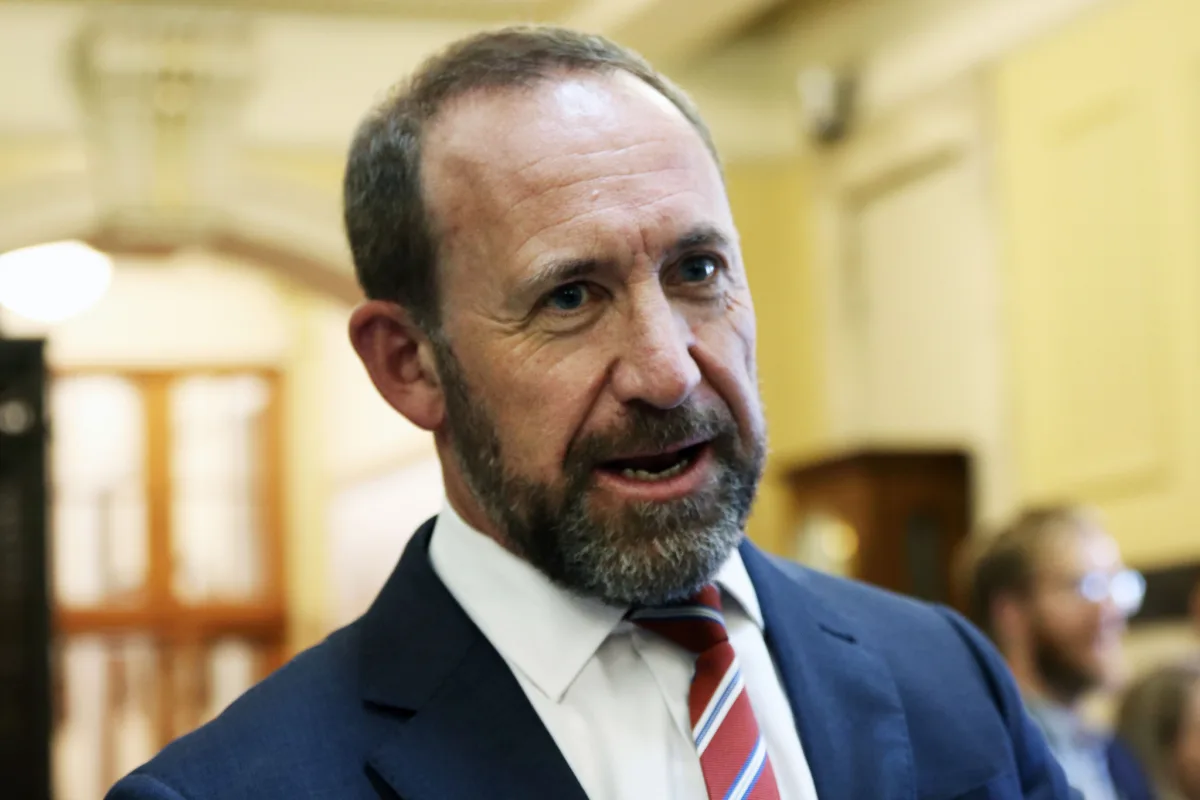
Andrew Little was a member of Parliament when these evaluations were being conducted. In 2017, he became Minister of Justice and was so impressed with the early results, he said drug courts would be “rolled out across New Zealand in 2018”. Each court costs about $3 million a year to operate. But since the drug court was established in Hamilton, no funding has been made available to roll them out anywhere else. Why? Because the Ministry of Justice misled Andrew Little and Cabinet about the remarkable effectiveness of the AODTC, and has consistently lied to Cabinet about the benefits of rehabilitation in prison.


 In April last year, Radio New Zealand reported that the Corrections Department was
  Remarkably, the document does not specify that the ‘relevant qualification’ has to be a graduate degree. Nor does it state that clinicians require a qualification in the assessment and treatment of addictive disorders.
 The Department seems to think the poor performance of the DTUs is CareNZ’s fault. They even initiated an evaluation of CareNZ’s performance by an independent consulting company, Julian King & Associates. Amazingly, the independent review reported that CareNZ was doing fine. See
  This makes no sense whatsoever. There are now over 10,000 people in prison in New Zealand and up to
  Tony Robertson was sentenced to eight years in prison for indecently assaulting a five year old girl in 2005. He was considered a high risk prisoner and the parole board declined to release him on four separate occasions. He was eventually released in December 2013 at the end of his sentence. Although he was not on parole, he was subject to ‘release conditions’ which means he was on an electronic bracelet for six months.
 At the same time, Smith made 27 recommendations identifying those areas where the management of high risk offenders such as Mr Robertson could be improved. That’s weird. Corrections did nothing wrong – but here’s 27 things they could have done better. That doesn’t add up does it?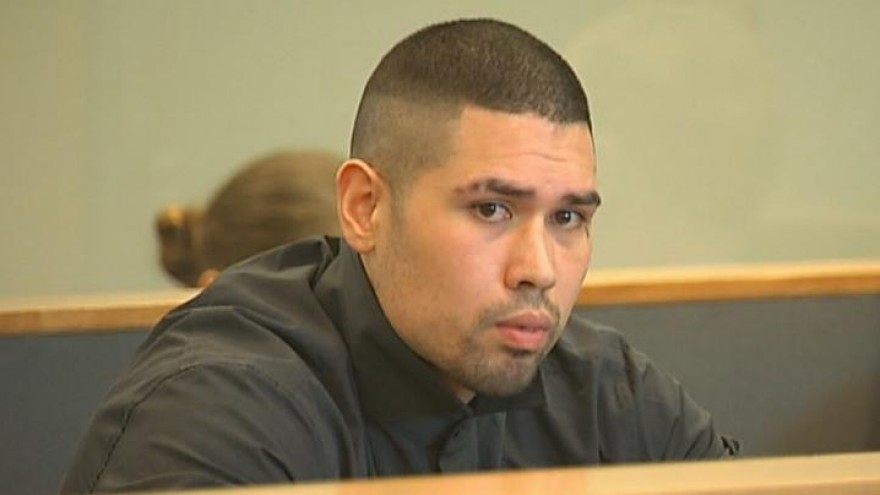
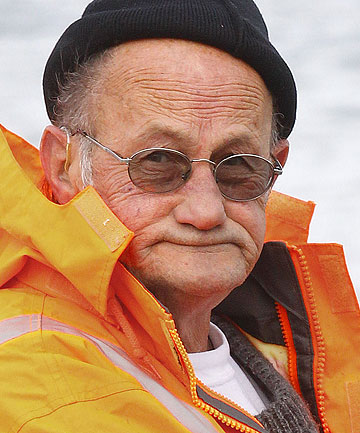 Robertson is not the only high-risk offender who has not been allowed to attend rehabilitation in prison. Stewart Murray Wilson (referred to by the media as the beast of Blenheim) was a prolific sex offender and was in prison for 17 years before he was released in 2015. He saw a psychologist only four times and
  Graeme Burton (right), a known drug addict, was in prison for 13 years, but
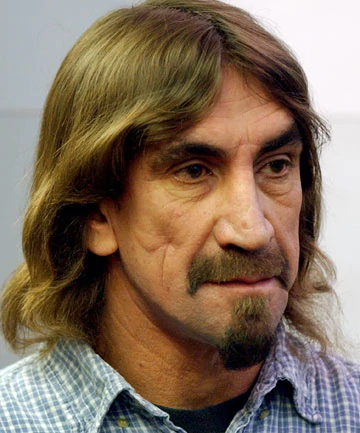
 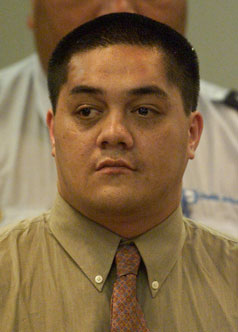 William Bell (left) is another drug addict and high-risk offender

 The reason is obvious. Those who end up in prison tend to come from backgrounds of deprivation and abuse, and suffer from mental health problems and addictions. A useful analogy is that are emotionally and socially crippled – the psychological equivalent of having two broken legs. Rehabilitation in prison is akin to placing a plaster cast on one leg. The other leg only gets a plaster cast when the prisoner is released – in the process of reintegration.
 Eleven of the twelve prison rehabilitation programmes currently offered by Corrections have almost no impact on reoffending rates according to the Department’s own figures. As a result, the Department has little hope of achieving its stated goal to reduce reoffending by 25% by the year 2017.


 BROOKINGBLOG