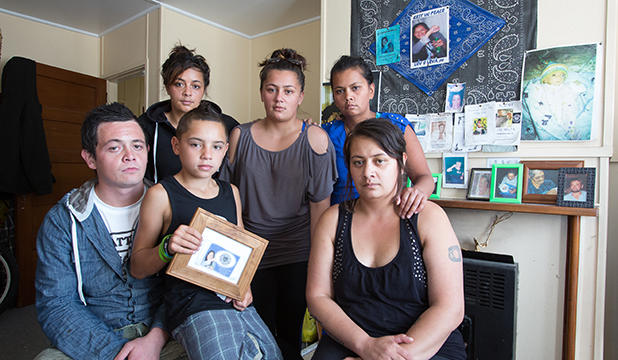
Corrections re-victimises the victims – Susan Couch’s story

On December 11, 2011 the NZ Herald reported that the families of those killed by Wililam Bell gathered to remember those they lost in the Panmure RSA ten years ago. Bell killed three people at the RSA and seriously injured another – Susan Couch.

In 2001, Ms Couch was working part time doing the club’s accounts. She survived Bell’s attack – but only just. Both her arms were broken; she received severe head injuries and lost about 80 per cent of her blood. Ambulance officers said she came as close to dying as she could get. She spent six months in Middlemore Hospital, followed by years of rehabilitation.

Permanent damage

The legacy of Bell’s assault on Ms Couch is still visible. The head injuries subsequently led to a stroke and permanent brain damage. She has no function in her left arm and can’t even wash the dishes. Her left leg is disabled and she walks with a stick.  She also has paralysed vocal chords which impact on her speech.  She was unable to get ACC for lost earnings or a lump sum payment because, shortly before the attack, she’d had to give up work to look after her young son. All she received from ACC was $60 a week.

Ms Couch brought a claim in the High Court seeking exemplary damages from the Corrections Department for failing to exercise “reasonable care” in Bell’s parole supervision. The Court of Appeal struck out the High Court action, saying her negligence claim could not succeed because the probation service owed her no duty of care. That was overturned by the Supreme Court last year when it gave her the go-ahead to sue the department.

But her quest for justice will need to show the Department had “consciously appreciated the risk” that releasing Bell on parole posed to her safety and that it “proceeded deliberately and outrageously to run that risk”. Ms Couch’s lawyer, Brian Henry, said she had “no illusions” that she had a difficult legal battle ahead but vowed he would show Corrections had deliberately contributed to the outcome.

So far legal proceedings have taken ten years and Ms Couch has still not had her day in Court. The hearing is finally expected to take place sometime this year.

How the Department failed Susan Couch

William Bell was in prison for 3½ years before he attacked Susan Couch and the three others he killed at the RSA. The Corrections Department failed to provide Bell with addiction treatment and psychological support in prison, and failed to monitor his release on parole.  In this respect, the Department has contributed to his on-going drug addiction which subsequently led to his rampage at the RSA.

Section 5 of the Corrections Act of 2004 says “The purpose of the corrections system is to improve public safety and contribute to the maintenance of a just society.”

In regard to Susan Couch, the Department failed miserably on both counts – it didn’t do anything with Bell that would improve public safety and certainly didn’t provide Susan Couch or society with justice.  All she wants is $500,000.  For God’s sake,  give her the money – and an apology.

Another untreated drug addict – the story of William Bell

In 1997, William Bell was sent to prison for five years nine months after he attacked and almost killed an attendant at a petrol station.  At the time of this assault, he already had 102 convictions for a raft of offences including theft, fraud, burglary, aggravated robbery, assault, trespass, and possession of drugs.   He was released in July 2001 after serving 3½ years.  Based on the law at the time, he was set free after serving two-thirds of his sentence, and the Parole Board had no say in the matter, other than deciding what release conditions to impose on him.

Bell managed to find work experience at the RSA in Panmure – without the permission of his probation officer.  However, staff at the RSA apparently didn’t trust him and after only two weeks, he was ordered to leave.  Bell had experienced rejection for most of his life and couldn’t handle it. Two months later, he came back and stole $12,000. In the process, he bludgeoned and shot three people to death, and seriously injured a fourth – Susan Couch.

What the investigation missed

The investigation which followed blamed understaffing, low morale and poor management within the Mangere Probation Service.  It also blamed the police for failing to act when he committed a minor offence a month before the murders.  The focus of the investigation was on what happened after Bell was released. The fact that he had been incarcerated for 3½ years and not been required to do any rehabilitation programmes in prison was completely ignored. The most significant oversight was that he was not required to attend treatment for his alcohol and drug problem.

He obviously had one. In addition to telling prison staff about his drinking, Bell came from a family with gang connections where binge drinking and drug use were part of daily life.  According to witnesses who testified at his trial, Bell was up all night drinking and smoking cannabis before the murders which occurred at about 8.00am the following morning.   He admitted he was using methamphetamine and apparently told his family he ‘blacked out’ while inside the RSA.

In other words, Bell had a history of alcohol and drug use which began long before he was sent to prison for attacking the service station attendant in 1997. Presumably, he continued smoking cannabis in prison. At the time of his rampage at the RSA four years later, he was drunk, stoned and high on methamphetamine – and had been awake for over 24 hours. Such conditions are clearly not conducive to impulse control. The combination of three different drugs in his system, combined with a lifetime of abuse, abandonment, and low self-esteem turned out to be lethal.

What Corrections failed to do

The most damning part of this story is that the Corrections Department was well aware that Bell’s offending was alcohol and drug-related – but did nothing about it. He was supposed to see a psychologist and have alcohol and drug treatment when he got out. Common sense dictates that Bell should have seen a psychologist and had alcohol and drug treatment while he was still in prison – rather than leaving this up to an understaffed and demoralised Probation Service to organise once he got out.

But no treatment was provided, and the Corrections Department failed to provide the Parole Board with an alcohol and drug assessment describing the extent of his addictions.  At his hearing, the Board members were effectively in the dark – ‘flying blind’ to quote Judge Carruthers. If an AOD assessment had been provided even at that late stage, the Board could have released him directly to a residential treatment programme in the community.  Instead, he was released to unsupervised accommodation in Auckland where he was free to drink and take whatever drugs he could find.

The point is that the mistakes made once Bell was released may never have occurred had the Corrections Department made better use of his 3½ years in custody. The Department’s failure to address his problems with substance abuse in prison far outweighed subsequent mistakes made by the Mangere Probation Service on his release. The failure to monitor Bell in the community simply added to a long chain of errors – and highlighted a systemic failure by Corrections to address addiction issues in prison. If he had been required to attend treatment in prison, and/or if he had been released directly into a residential programme in Auckland, William Bell’s victims might still be alive today.  And Susan Couch wouldn’t have had to waste ten years of her life trying to sue the Corrections Department for damages.

Garth McVicar clones himself as a woman

The attack on the five year old Belgian girl on holiday with her family at the Habitat Club in Turangi is hard to fathom. Friends of the 16 year old who admitted raping the young girl describe him as a ‘nice guy’ and are struggling to believe he would do such a thing.  His mother also felt that her son was not the monster he had been portrayed by the media.

Despite the general disbelief that this ‘nice guy’ could do such a thing, angry locals abused his family and threw things at their home. According to the NZ Herald, the attack also stirred a young Auckland woman to call for harsher sentences for violent offenders. Tamsin Marshall started an online petition to introduce cumulative sentences for serious offenders.

She was quoted as saying: “When it happened, I was horrified – I actually lay in bed imagining it was my little girl. I’ve been reading the papers for years and have watched the increase in violent crimes and being horrified … and this case was the point where enough is enough, something has to be done.”

Garth McVicar’s clone

Ms Tamsin sounds like a  clone of Garth McVicar of the so-called sensible sentencing trust. McVicar has been banging on about the increase in violent crime and lobbying for cumulative sentences for some time. The problem is that Garth McVicar is  truely misinformed – there is no increase in violent crime. Over the last 20 years the murder rate has dropped by nearly 50% and crime rates in general are down.

And yet the public believes violent crime is on the rise. A Ministry of Justice study in 2003 found that 83% of New Zealanders held inaccurate and negative views about crime levels in society and ‘wrongly believed’ that crime was increasing.  A more recent study in 2009 by Dr Michael Rowe, also from Victoria University, found an overwhelming public belief that crime has got worse despite New Zealand’s murder rate dropping by almost half in the past 20 years.

Global perceptions of safety

As a result of these inaccurate beliefs, a United Nations report assessing global perceptions of crime and safety found that between 2006 and 2009, only 57% of New Zealanders reported feeling ‘safe’.  This means that New Zealanders feel no more secure than the citizens of former communist states like Bulgaria (where only 56% feel safe) and Albania (54%). We’re also on a par with Middle Eastern countries like Iran (55%) and Lebanon (56%) and African countries such as Angola (53%), Nigeria (51%) and Uganda (51%).

There’s something wrong here. In the United States, where the murder rate is four times higher than in New Zealand, 75% of the population report feeling safe.  In other words, public perceptions of safety in New Zealand are seriously out of touch with reality.

Sensationalist reporting in the media

It’s the media and their obsession with violent crime and Garth McVicar, which is largely to blame for this. A 2002 study into the role of the media’s coverage of crime reported:

“The selective and disproportionate media coverage of crime, particularly violence, when set alongside actual Police statistics, raises questions of skewed reporting in NZ (and elsewhere) at a time when crime rates are falling”.

When respondents to these surveys were asked where they get their information about crime, they said ‘from the media’. When journalists are asked the same question, they openly admit they rely on Garth McVicar. In April 2010, TVNZ broadcast a Media 7 interview by Russell Brown about Mr McVicar’s extraordinary access to the media. In his introduction, Mr Brown said:

“In the past nine years, journalists have been really lucky. Every time they’ve needed someone to tell them that their justice system is failing… they’ve been able to rely on just one man…Garth McVicar, a cocky from Hawkes Bay.”

The last thing New Zealand needs is a female clone of Garth McVicar. What it needs is less sensational reporting of crime in the media.

James Whenuaroa – sent to prison for stealing orange juice

On January 7, the New Zealand Herald reported the story of James Whenuaroa – sentenced to prison for six weeks for stealing a bottle of orange juice from a supermarket. He told the judge he took it because he was hot and thirsty. Perhaps the most pertinent part of the story was that Mr Whenuaroa has 350 previous convictions.

What the Herald didn’t report was that Mr Whenuaroa is a chronic alcoholic who has a history of drinking methylated spirits and as a result, has some measure of cognitive impairment. Virtually his entire history of offending has occurred because of his drinking – mostly for shoplifting alcohol, being drunk and disorderly and willful trespass. He has been sent to prison nearly 40 times in the last 20 years; he’s usually in and out three or four times a year. When he gets out, he starts drinking again the same day.

The battle for a neuropsychological assessment

Mr Whenuaroa was referred for an alcohol and drug assessment at least three times – in 2006, 2007 and 2008. After interviewing him in 2006, I recommended to the Court that Mr Whenuaroa should have a neuropsychological assessment (to see what he’s capable of learning) and be referred to Moana House which is a long term rehabilitation programme in Dunedin. The judge ignored the recommendation and sent Mr Whenuaroa to prison instead.

In 2007 I again recommended a neuropsychological assessment. This time the judge agreed, but when Mr Whenuaroa appeared for sentencing two months later, the assessment had not been done as the psychologist was too busy. Moana House refused to accept him without one. He was released on to the street and relapsed immediately. Not surprisingly Mr Whenuaroa re-offended soon afterwards and was remanded in prison once again.

The assessment was finally completed nearly a year later. However, this time the Court refused to release a copy of it either to his lawyer, to Moana House or to myself. Once again, Mr Whenuaroa was released into the street and relapsed immediately. Not surprisingly, he reoffended and appeared in court again in 2008. Finally, the court agreed to release a copy of the psychologist’s report to those who were trying to help him and Mr Whenuaroa eventually made it to Moana House. However, he left after a few weeks as he wanted to go and see his alcoholic girlfriend in Taupo.

The need for compulsory treatment

Over the years Mr Whenuaroa has been referred to residential treatment programs a number of times. But because of years of alcohol abuse, he has significant memory problems. His short term memory is so poor he struggles to remember anything he was told more than 30 minutes before.  So even when he attends rehabilitation, he can’t remember what he is taught. Because of his condition, he needs long term treatment and long-term support afterwards. But he never lasts the distance. He gets frustrated and generally walks off after a few weeks. And no one makes him stay.

Mr Whenuaroa can be made to stay in prison – for a few weeks at a time. That’s easy to achieve – even though rehabilitation is not available to the 7000 prisoners a year given short sentences.  Let’s not forget that 80% of those sent to prison each year are given short sentences and our prison system simply doesn’t cater for them. With a few exceptions, only those given a sentence of more than two years are allowed to attend rehabilitation programmes.

So although Mr Whenuaroa has been forced to stay in prison 40 times, he has never been ‘forced’ to complete a treatment programme. That’s just crazy. Mr Whenuaroa could be compelled to stay in treatment – by committing him to a rehab programme in the community under the Alcohol and Drug Act or the Mental Health Act. To put that in place takes a bit of time, thought and energy but Mr Whenuaroa has never been committed. Instead the justice system recycles him – in and out of prison, and occasionally, in and out of rehab.

The $3 million cost

Recycling is expensive. He’s already 47 years old and as a lifetime offender, he will end up costing the taxpayer more than $3 million in police, court, prison and legal aid costs. Once his health deteriorates, he will need even more assistance – from the health system. If he was compelled to attend long term treatment for 18 months under the Alcohol and Drug Act, that might cost about $50,000. Not a bad investment – both for Mr Whenuaroa and for society. All it would take is for the justice system to have enough compassion and resolve to find out what Mr Whenuaroa really needs – instead of sending him to prison for stealing a bottle of orange juice.

Court of Appeal throws the book at Corrections Department

The Sunday Star Times ran this story on New Year’s Day.

“Dismayed judges have ordered Corrections bosses to read an expert’s book on rehabilitation after being shocked a P-addicted prisoner would be forced to wait years for drug treatment. In a Court of Appeal decision last month, three judges cited Roger Brooking’s book Flying Blind, which slams the government’s hard-line approach to law and order.

Long-term inmates must now wait until they are eligible for parole before being offered drug and alcohol rehabilitation in prison, but judges quashed Glen Fleming’s minimum non-parole term of four years so he could seek treatment sooner. The Bay of Plenty man is serving an eight-year sentence for manufacturing and supplying methamphetamine.

A Corrections spokesperson said the organisation would consider the judge’s ruling but Brooking fears Corrections will dismiss the message. “Corrections operates, as far as I can see, as a law unto itself,” Brooking said. The drug and alcohol counsellor said he comes across cases like Fleming’s on a weekly basis. His frustration at the lack of support and rehabilitation for prisoners led him to write Flying Blind.

Brooking said he was pleased the Court of Appeal had taken the book seriously. “It’s a bit of a poke in the eye for National. They refused to accept copies of the book.” Brooking provided free books to MPs in September, but National members were the only ones to refuse the offer. “Since the Court of Appeal has recommended Corrections management should read the book, hopefully National MPs who refused to even look at it will reconsider.”

Brooking’s affidavit to the court supported removing the non-parole period for Fleming on the basis the P-addict urgently needed rehabilitation. The judges said Fleming’s chances of rehabilitation would be reduced if he was forced to wait until he was up for parole. They removed his non-parole period, and although they refused to express their view on Flying Blind, they called for Corrections to speak up on the issue.

“The wider issue of the availability of rehabilitation programmes in prison for drug offenders, and the timing of such programmes, is a matter of importance and some public controversy,” the judges wrote. “It is important the department’s policies on this issue be known to sentencing judges so they can be taken into account in sentencing decisions.”

A Corrections spokesman confirmed the department had read the decision. “We have noted the comments made and will be giving them due consideration.” Rehabilitation and reintegration assistant manager Dr David Wales said thousands of prisoners received drug or alcohol treatment every year. “It’s really easy to come at this from a drug and alcohol point of view, but we have to look at the whole person and all the issues that contribute to their offending,” he said.

However, Brooking said setting up a drug court, increasing rehabilitation programmes, and investing in halfway houses could cut crime. Parole Board chairman Judge David Carruthers and Chief Justice Sian Elias had read Flying Blind, while Otago University had also made the book recommended reading for criminology students.”

National MPs refuse to accept free book about failures of justice system

Before the recent election, Wellington alcohol and drug counsellor Roger Brooking offered to give a free copy of his critical expose of the justice system to every member of Parliament. His new book is called Flying Blind – How the justice system perpetuates crime and the Corrections Department fails to correct.  He asked Chester Borrows (National), Grant Robertson (Labour) and Kennedy Graham (Greens) to meet him on the steps of parliament on September 13 to accept copies on behalf of their respective MPS.

Grant Robertson and Kennedy Graham agreed. So did Mr Borrows – at first. But after consultations with caucus colleagues, he changed his mind. In a churlish display of ingratitude, the National party has refused to accept copies of the book out of fear that the title of the book is too provocative. Mr Borrows wrote to Mr Brooking saying:

“I think the subtitle of the book runs counter to the current achievements in Corrections…. No matter how you may mitigate the subtitle within the pages of the book, the immediate proposition will be what is reported and perceived. I believe that appearing to receive the books will look like an endorsement of a publication which sets out to be provocative and will be seen as counter to any rehabilitative work being done in prisons presently.”

Is this a classic case of judging a book by its cover? Readers can decide for themselves.

Unfortunately, such anti-intellectualism is rampant in New Zealand politics and undermines the use of academic research and the development of evidenced-based policy. The Prime Minister’s chief science advisor, Sir Peter Gluckman, seems to agree. Sir Peter is quoted  in Flying Blind saying that New Zealand is still driven by a No 8 wire mentality.

Brooking makes the case that Garth McVicar is the chief proponent of the No 8 wire mentality in this country. The problem is McVicar is a farmer – with no qualifications in law, sociology, psychology or criminology.  Flying Blind describes the links between Garth McVicar and the National party and shows how this relationship is responsible for much of New Zealand’s overly simplistic, ‘lock ’em up’ approach to penal policy.

Prisoners bored to death and forced to sleep in the toilet – the case of Trevor Ludlow

In  May 2006, National Finance went into receivership owing more than 2000 investors about $21 million. In October, 2011 one of the former directors, Trevor Ludlow, was sentenced to five years and seven months in jail. He was found guilty of charges laid by the Serious Fraud Office relating to theft as a person in a special relationship.  He was  found to have breached the terms of the trust deed under which National Finance operated, personally defrauding investors of an estimated $3.5 million.

Since he was sentenced, Mr Ludlow has been held in Mt Eden, at the brand new purpose built prison for inmates on remand.  Ludlow is not on remand but has been kept in Mt Eden because it’s close to court and he was still facing eight additional charges of misleading investors and making false financial statements.

“Nothing to do” in prison

Mr Ludlow pleaded guilty to those charges on December 13.  During court proceedings, he broke down in tears complaining: “There is nothing to do in Mt Eden … it’s a horrible environment. It was awful to sit around all day with nothing to do. It’s terribly frustrating.”  Ludlow said he had enrolled in a correspondence class but was not being allowed to do it in Mt Eden prison.  He asked the judge to sentence him within the week because once sentencing takes place he will be moved to another prison.

Not surprisingly, there has been little sympathy for Mr Ludlow. The judge said: “I can’t help you. You’ve been found guilty and sentenced to jail.”  Callers to talkback radio commentators were even more scathing and thought that Mr Ludlow was getting his just deserts.

Fair enough. Ludlow deserves to be in prison. But his comment  that there is ‘nothing to do’ in Mt Eden prison contradicts earlier claims by Garth McVicar that the new Mt Eden prison is a  ‘better environment’ and run like ‘Club Med’.  Prisons are soul destroying environments with very little rehabilitation or work opportunities and Mt Eden is no different.

Bear in mind that Mt Eden prison is run by Serco – a private company in a private-public partnership with Government.  When the contract was awarded in 2010, former Corrections Minister Judith Collins (now Minister of Justice), said Serco had a “strong track record in running jails, and would bring fresh ideas to the prison’s management.  I’m confident that the company will bring the high standards of professionalism, safety, rehabilitation and security expected by the Government to Mt Eden/ACRP.”

Forced to sleep in toilets

Judith Collins failed to do her homework.   Serco is not the squeaky clean company she claims it to be. At a Serco run prison in Britain, prisoners have been forced to sleep in toilets because of overcrowding.  Prison inspectors uncovered the practice during an unannounced visit to Doncaster prison in 2008. The chief inspector of prisons, Anne Owers, said: “We were disappointed to find that two-person cells had been turned into three-person cells by placing a bed in the shared toilet.”

Two years earlier, the inspectorate criticised the company for “institutional meanness after finding there were inadequate mattresses, and many prisoners had no pillows, no toilet seats and nowhere to store belongings.  The chief inspector branded conditions at Doncaster as “squalid and deteriorating”.  Serco now runs four prisons in the UK.  If the Wiri prison goes ahead and Serco gets that contract as well, it will operate two prisons in New Zealand.

Conditions in New Zealand are not much better; our prisons have become so overcrowded that Judith Collins decided to put inmates into shipping containers.  These containers are quite small and some have two beds – and every cell has a toilet next to the bed. New Zealand prisoners are also ‘sleeping in the toilet.’

No rehab on remand

But let’s get back to Mr Ludlow who’s dying of boredom in Mt Eden. The Serco run Mt Eden prison was purpose built to hold prisoners on remand – those who have not yet been sentenced.  Approximately 14,000 New Zealanders spend time on remand every year.  The point is remand prisoners are not eligible to attend rehabilitation programmes because they have not yet been convicted of anything.

So it seems that Trevor Ludlow is being held in a remand prison even though he has already been convicted – but Serco is applying its (remand) rules which appear to prevent him from even starting a correspondence course – which Serco doesn’t even have to pay for because Ludlow’s  organising it himself.  Is this just another example of ‘institutional meanness’?  Ludlow needs to keep himself occupied as he almost certainly won’t be eligible to attend rehabilitation programmes in prison.  This is because he’s in his 50s and (presumably) has no previous convictions – so will be classified at low-risk of re-offending. Only medium and high risk prisoners are allowed to attend rehabilitation.

So while Trevor Ludlow does not deserve much sympathy for the fact that he is in prison, his tearful comments to the judge about prison conditions in New Zealand should not be ignored.  Mr Ludlow is currently in a prison run by a private company with a documented history of poor care and ‘institutional meanness’. Once he is sentenced on his current charges, he will be moved to a prison run by the Corrections Department – where he will also not be eligible to attend rehabilitation programmes. If he’s lucky, he just might get to do his correspondence course.  But he’ll still be sleeping in the toilet.

$350 million missed by Peter Dunne

New Zealanders want the Government to toughen up – not by putting more people in prison but by tackling the death and social destruction caused by binge drinking. Research conducted on behalf of the Ministry of Health shows huge public support for moves to raise the minimum price of alcohol. The survey shows the vast majority support raising the price with only 24% opposed; 65% support reducing the hours alcohol can be sold; more than 75% support raising the drinking age to 20 (including 68% of people aged 18 to 24); 82% support increasing restrictions on alcohol advertising; and 65% believe there are too many liquor outlets.

The research validates recommendations in the Law Commission’s recent report on proposed changes to New Zealand’s liquor legislation. The Commission’s recommendations were also endorsed by Prof Doug Sellman and hundreds of medical professionals in New Zealand as the ‘5+ Solution’ – based on the most up to date international research on how to reduce alcohol related harm in society.

Raising the price

The research indicates that raising the price of alcohol – by increasing the tax component – is the single most effective intervention that any government can take. Increased levies would affect two groups in particular – the young, who tend to have limited income to spend to alcohol, and binge drinkers who spend a significant proportion of their income on alcohol. These are the problem groups in society that need to be hit the hardest.

Peter Dunne apparently had the results of this survey sitting on his desk in mid-2010 while National was in the process of seeking further submissions from the public on this issue – but refused to publish it. He sat on the report for over a year and, when it finally became public two days ago, he was accused of suppressing the results. Interviewed on National Radio, he denied suppressing anything, but gave two reasons for failing to publish it. One was that “the data was essentially consistent with a range of public views already available”. The other was that the $10,000 it would have cost to publish “could be better spent elsewhere in the health sector”.

Hollow arguments

These are hollow arguments. Until now, the two main sources of information about public attitudes to binge drinking came from unscientific media polls and public outrage at the damage alcohol has been causing. Coverage given to the death of 16 year old King’s College student James Webster from alcoholic overdose may have been a turning point in public opinion.

However, the research that Peter Dunne had sitting on his desk was conducted by a Ministry of Health committee using scientifically validated methodology and procedures. As such, it was the only reliable source of information on the public attitudes to alcohol law reform available. So to argue that there was no need to publish the report because the data was essentially consistent with an existing range of views is nonsense. Media stories are anecdotal and unreliable and ideally should not be used to guide policy and legislation. For that we need facts, figures and reliable research.

The argument put forward by Mr Dunne that the $10,000 needed to publish the report “could be better spent elsewhere in the health sector” is even more facetious. Mr Dunne expanded on this in his radio interview by saying that Government didn’t want to spend the $10,000 because it was scratching around to find money for its methamphetamine strategy at the time. Once again, Mr Dunne is missing the point – well two points actually.

Alcohol the biggest drug problem

The first is that alcohol is by far the biggest drug problem in the country – not methamphetamine. Alcohol kills over 1,000 New Zealanders every year and according to Bryan Easton, a leading economist, it costs the country about $16 billion a year. In comparison, methamphetamine is involved in perhaps two deaths a year – not from overdose but because of the occasional murder committed under its influence – while alcohol is involved in over half of the 60 to 80 murders committed every year. If a choice has to be made between the social destruction caused by alcohol or by methamphetamine, dealing with binge drinking provides a lot more bang for our bucks.

The second point Mr Dunne has overlooked is that if the Government actually adopted the recommendation to increase the price of alcohol – as supported by the ‘suppressed’ research – this would raise $350 million. That’s what the Law Commission said a 10% increase in the price of alcohol would achieve. And right now New Zealand needs every source of revenue it can find. Christchurch needs rebuilding, public servants are being laid off left right and centre, and the country is facing the biggest deficit in its history.

And we have a binge drinking culture which is out of control. Under the circumstances, Government’s reluctance raise the price of alcohol (and adopt the other measures supported by this research) is hard to fathom. This ‘suppressed’ research suggests Mr Dunne is not interested in what the public clearly wants the Government to do – raise the price – and pick up $350 million along the way. As Revenue Minister, there’s a lot you could do with it; and you’ll get your $10,000 back.

Graeme Burton – untreated drug addict set up to fail

Graeme Burton has murdered two people. In 1992 he was sentenced to life in prison for the murder of Paul Anderson who was working as a lighting technician in a nightclub. Burton had been drinking and was found to be under the influence of six different drugs at the time.  He was released on parole after 14 years in prison without attending treatment for his drug addiction.  He soon relapsed, and during the next six months he used stand-over tactics against known drug dealers to obtain methamphetamine. He shot and killed Karl Kuchenbecker in the hills of Wainuiomata apparently hoping that police would then kill him. He was shot in the leg which subsequently had to be amputated.

Burton’s Background

Graeme Burton was adopted as a baby by an older couple.  His foster father died when he was only three, leaving his foster mother to raise him on her own.  As a result of put downs and constant criticism, Graeme grew up feeling insecure and angry with little sense of attachment to his adopted mother. He began using drugs at the age of 15 – and no doubt found they relieved much of his underlying distress.

The TVNZ documentary, ‘Beyond the Darklands’, also highlighted Burton’s use of LSD, cannabis, alcohol and prescription pills;  he used to break into chemist shops looking for benzodiazepines and committed burglaries to get money for drugs. From the age of 17, he was using drugs almost on a daily basis; by the time he was 21, he had 91 convictions for property, fraud and other drug-related crimes.

Burton’s frustrations came to a head in 1992, after he was refused entry to a nightclub. He took his resentment and rage out on Paul Anderson who worked at the club, stabbing him to death in an alcohol and drug fuelled frenzy. He was said to be ‘out of it’ on six different drugs at the time.

Burton was sentenced to life and continued using drugs in prison.  He spent 14 years behind bars but managed to avoid returning positive drug tests in the last three years before he was paroled.   He was released into the care of his biological mother whom he barely knew. She’d been living in Australia but agreed to come back to New Zealand for one month to assist her son’s ‘reintegration’.

This plan was doomed from the start. Soon after he was released, Burton started using methamphetamine and anything else he could get his hands on. His mother went back to Australia and he spent the next few months using stand-over tactics and assaulting drug dealers to feed his addiction.  Burton’s last assault on a Wellington drug dealer to obtain more methamphetamine was only three days before he killed Karl Kuchenbecker in January 2007. Altogether, his drug-fuelled rampage lasted six months before it came to an end in the hills of Wainuiomata.

Mistakes made while Burton was in prison

While in prison, Burton attended a rehabilitation programme targeting his propensity for violence – but was not required to attend treatment for his drug addiction. Numerous psychologists and psychiatrists who interviewed him before his release pointed out that his addiction had not been addressed. At the Parole Board hearing in June 2006  (at which he was released), the Board had six different reports all of which recommended alcohol and drug assessment and treatment, or identified relapse to drug use as a risk factor.  The Corrections Department refused to provide one.

The Department even ignored Section 43 (1a) of the Parole Act which requires it to provide the Board with all relevant information about factors which contribute to an inmate’s offending.  Since the Department was well aware that Burton’s offending was alcohol and drug related and since six different reports all recommended further alcohol and drug treatment, in Graeme Burton’s case,  the Department clearly neglected its statutory responsibilities.

Burton’s drug addiction was not the only factor involved in his offending. The psychologists who assessed him said he had a psychopathic personality which pre-disposed him towards violence.  To address this, in 2004, he was required to attend the Violence Prevention Unit (VPU) in Rimutaka, and some of the psychological reports indicated he made some progress on that programme.  But even if Burton had learnt anything in the VPU, whatever he learnt would have been forgotten as soon as he got drunk or took methamphetamine. Because his drug addiction was never treated, other attempts at rehabilitation were a complete waste of time.

The flawed focus of subsequent investigations

Once the subsequent investigations began into what went wrong, the focus was mainly on the mistakes made by the Probation Service and the Police after Burton’s release.  Mistakes were certainly made, but the crucial ones happened long before Burton was paroled. They were made over the entire 14 years that Corrections had him in their custody. The Department failed to treat his drug addiction, ignored the recommendations of six expert reports and failed to provide the Board with an alcohol and drug assessment despite a statutory obligation to do so.

In other words, the Department released an untreated drug addict into the community without a reintegration plan which addressed one of the main factors in his offending. Since Burton wasn’t treated in prison, on release he should have been sent to a residential treatment centre  where he would have been under constant supervision by staff for up to 18 months and drug tested regularly; if he relapsed, or misbehaved, he could have been recalled to prison immediately. If a proper reintegration plan such as this had been put in place, the outcome of this case could have been very different.

In saying that, Burton’s case is not unusual. Ninety per cent of prisoners have problems with alcohol and drugs and most are released without attending any treatment. The recidivism rate in New Zealand is 52% (return to prison) within five years. The lack of addiction treatment in prison and the failure to provide accommodation and support on release leads almost inevitably to relapse and re-offending. It sets prisoners up to fail. Graeme Burton is one of thousands of prisoners released every year who are set up to fail.

Legal loophole in drink driving laws

The case of 16 year old Levi Elliot who killed another teenager in a drink driving accident illustrates a significant failing in New Zealand’s drink driving laws.

Background

On May 28, 2011 Mr Elliot and 17 year old Shaun Nilson were drinking at a gathering at a friend’s home in Hamilton.  At 1.00am they went for a drive with Mr Elliot driving – even though he was still on a restricted licence and should not have had a passenger in the car.  Mr Nilson was killed when he was flung from the car after Elliott tried to overtake another car at speed and crashed into a power pole.

Mr Elliot was found to be five times over the legal alcohol limit (0.03) for his age. This is almost double the legal limit (at 0.08) for an adult.  The Government subsequently reduced the legal blood alcohol limit for those under the age of 20 to zero.

On November 17, Justice Ellis sentenced Elliott to three years in prison and disqualified him from driving for four years from his release.

Finite vs indefinite disqualifications

This death was caused by drink driving – and immaturity.  Although it is unclear from the available information whether or not Mr Elliot has a drinking problem, this is clearly a death where binge drinking is a significant factor.

Mr Elliot will be eligible for parole after one year.  He may or may not be released at that point. But before he gets his driver’s licence back – in fact before any drink driver gets their licence back – they should have to attend an assessment to see if they have a drinking problem and need education, counselling or treatment.

However, the only drink-drivers required by law to attend an alcohol and drug assessment are those given an ‘indefinite’ disqualification – affecting only about 1,500 of the 30,000 people convicted for this offence every year.  The vast majority of drink-drivers are disqualified for between six months and 12 months, and automatically get their licence back at the end of the disqualification – with no questions asked.

Mr Elliot was disqualified for four years.  This is a finite sentence, not an indefinite one – so he will be able to get his driver’s licence back at the end of that period simply by resitting the test. He will not be required to attend an assessment to see if he has a drinking problem – nor will he be required to attend an alcohol education programme.

This scenario is not uncommon. In September 2009, 71-year-old Alison Downer killed a cyclist near Otaki. It was her fourth conviction. Ms Downer was sent to prison for 2½ years and given an eight-year disqualification.  In March 2010, Frances Stubbs was fleeing a police alcohol checkpoint in Blenheim when she crashed and killed a mother of five children. Ms Stubbs was given eight months home detention and disqualified for 3½ years. There are many other cases where someone has been killed by a drink driver and the offender has been given a lengthy disqualification but not been disqualified indefinitely.

How long is indefinite?

Even for those given an ‘indefinite’ disqualification, the outcome is fairly meaningless. There’s nothing ‘indefinite’ about it. After a minimum period of one year and one day, drink-drivers with an ‘indefinite’ disqualification can see an approved alcohol assessor and begin the process of getting their licence back. If they pass the assessment, and resit their licence, they can be back on the road within 18 months. Although 1,500 people a year receive indefinite disqualifications, about 1,000 others with indefinite disqualifications get their licences back each year.  Even recidivist drink-drivers with five or more convictions seem to have little difficulty regaining their driver’s licence.

For a detailed analysis of how New Zealand’s drink driving laws encourage repeat drink driving see Flying Blind – How the justice system perpetuates crime and the Corrections Department fails to correct

A Dunne deal – compulsory alcohol and drug assessments on all parolees

United Future’s Peter Dunne has just thrashed out an agreement with Prime Minister John Key whereby Mr Dunne retains his role as associate Minister of Health and National will implement a number of United Future’s policies.  Among those policies is one I have been advocating for some time – that the Parole Board should be given an alcohol and drug assessment on all prisoners appearing before the Board.

Currently this doesn’t happen which means the Parole Board is ‘flying blind’. This was a comment on the problem by the Head of the Parole Board, Judge David Carruthers. It  became the title of my new book: Flying Blind – How the justice system perpetuates crime and the Corrections Department fails to correct.  

Flying Blind points out that section 43 of the Parole Act requires the Department to provide “copies of all relevant information relating to the offender’s current and previous convictions” but that the Corrections Department has been ignoring this requirement for years.  The book  identifies the lack of alcohol and drug assessments on parolees as one the systemic failures of the Corrections Department which contributes to New Zealand’s high rate of recidivism.  On page 141,  it says:

“The failure to comply with section 43 is a serious omission which compromises the Board’s ability to keep the community safe. It means that prisoners are frequently released without attending substance abuse treatment in prison or on release, because the Board was not told that alcohol or drugs were involved in their offending.”

Flying Blind documents a number of other systemic failures by the Corrections Department to assist prisoners reintegrate back into the community.  One of these is the lack of addiction treatment agencies in the community who will take offenders from prison.  One has to ask:  What is the point of assessing prisoners coming up for release when there are so few treatment programmes available in the community that will take them?

This is all part of the appalling lack of accommodation and support which is available when prisoners are released.  Most of those who end up in prison have been the victims of dysfunctional families and all kinds of adversity in their childhood. There’s not much point in putting offenders through rehabilitation in prison but then not providing them with extensive support on release. In a press release, Mr Brooking said:

“That’s like expecting a man with two broken legs to start walking if you put a plaster cast on just one leg. It’s totally unrealistic – because both legs need fixing. If prisoners go back to the same alcohol and drug filled environment they came from, no amount of rehabilitation in prison is going to make any difference. The real problem is a lack of accommodation, halfway houses, treatment facilities and professional support in the community.”

Time to decriminalise all drugs

See this excellent article by Gwynne Dyer about the need to decriminalise all drugs. Dyer is a London-based independent journalist, whose articles are published in 45 countries.

He quotes Milton Friedman, a Nobel Prize winner, and the most influential economist of the 20th century. Twenty years ago the right wing Friedman said: “If you look at the drug war from a purely economic point of view, the role of the government is to protect the drug cartel (in NZ, read ‘gang’ instead of ‘cartel’). It is only because the government makes the drugs illegal that the criminal cartel (gang) has a highly profitable monopoly on meeting the demand.”

Dyer also quotes former Mexican president Vicente Fox who supported the US-led war on drugs when he was in office in 2000-2006, but more recently he has condemned it as an unmitigated disaster. “We should consider legalising the production, sale and distribution of drugs,” he wrote on his blog. “Radical prohibition strategies have never worked.”

Prohibition has never worked in New Zealand either. All psychoactive drugs except alcohol are banned here; recreational users and addicts are prosecuted to the full extent of the law.  And yet over 400,000 Kiwis smoke cannabis every year, 100,000 nearly every day. The number of prosecutions for cannabis offences is rising and in 2008, there were 9,500 convictions. Enforcement and social costs have gone up accordingly. In 2001, the black market for cannabis in New Zealand was estimated at $190 million; in 2006 the social costs, which includes the cost of police, the courts and Corrections to enforce cannabis laws, were estimated at $430 million.

ACT leader Don Brash says this approach is part of the failed strategy of prohibition condemned by the UN and is a huge waste of money and resources. Mr Brash believes police time could be better spent investigation more serious crimes – ones with victims.

Indeed, if cannabis was deregulated and taxed (like alcohol and cigarettes), and police no longer had to enforce prohitibition laws against cannabis users, the net benefit to society is estimated to be between $400 and $860 million.

Prisoner dies when guards too busy to help – the case of Anna Kingi

Eva BradleyIn November 2011, the Waiikato Times reported that a Hamilton woman died in prison of a heart condition after her calls for help were ignored by guards. An inquest into the death of Anna Selina Kingi, 41, at the Auckland Coroner’s Court heard that Ms Kingi was found dead in her cell at Auckland Regional Woman’s Facility (in 2008) more than an hour after she activated her alarm.  She was mother of seven children (see photo) and grandmother of one and had been in prison for just under a month when she died.

The inquest heard that Ms Kingi was scheduled to see a doctor the day before she died, but the doctor was too busy and did not see her.  When she became distressed the next day (November 10, 2008), Ms Kingi pressed the emergency alarm in her cell  but prison guards ignored the call. One guard, whose name was suppressed, said she heard the alarm, but was busy so she just asked through the intercom if Ms Kingi was alright.  There was no answer. So she ignored it, did not send anyone to check, did not record the call and did not refer it to the incoming shift.

A few minutes earlier, another guard who was supposed to visually check her cell, failed to do so.  Three minutes before Ms Kingi pressed her cell alarm, she walked past Ms Kingi’s cell without looking in. She told police that rather than look in the cells, she fastened her digital ID to a broom handle, reached up and swiped the card over a sensor to make it look like she had done her rounds.

Cardiologist Dr Jim Stewart told the inquest Ms Kingi died of hypertrophic cardiomyopathy – an inherited disorder that causes thickening of the heart, making it hard for the heart to pump blood. He said normally there was a lead-in tachycardia (rapid beating) when the disorder led to a fall in blood pressure.  He said defibrillation or CPR could have worked if performed  in the first five minutes after the alarm. When Ms Kingi’s body was discovered more than an hour later, it took 13 minutes to get the keys and open her cell.  The inquest was told that at the time the prison had only one defibrillator and custodial staff could not have accessed it anyway.

This story is typical of the quality of healthcare offered to prisoners.  It is not dissimilar to the case of Justin Rys who also has a heart condition and has sleep apnoea. Mr Rys has to wear an oxygen mask while he sleeps – otherwise he stops breathing during the night placing additional stress on his heart.

While Mr Rys was in Rimutaka prison on remand earlier this year, the machine which pumps the oxygen broke down. For two weeks, nursing staff ignored his pleas for help. It was only when his lawyer intervened that Mr Rys was taken to hospital and given a new oxygen pump. If it hadn’t been for his lawyer, My Rys might also have died in prison.  Prison guards and nursing staff at Rimutaka clearly would not have cared.

Compensation

In April 2014, five years later, the Corrections Department “apologised unreservedly” and made a confidential payment to Ms Kingi’s seven children after the family initiated court proceedings. See: Apology, payout over prisoner’s death. Her children chose to sue Corrections’ chief executive Ray Smith after meetings between the parties failed to resolve matters,


Judicial insanity – man sent to prison 38 times – Steven Bunyan

A story in the Taranaki Daily News reports that 33 year old sickness beneficiary Steven Bunyan, has just been sent to prison for the 38th time. He was jailed for assaulting a family member (apparently his mother), contravening protection orders, breaching court release conditions and repeat drink-driving. He was jailed for 10 months and disqualified from driving for 12 months and one day.

Bunyan’s mother wrote in her victim impact statement that he reverted to his old ways when staying with her in Okato, that he was taking drugs and ‘always spaced out’. She said she had to think about the effect on the wider family. Judge Roberts noted Bunyan had nine previous convictions for assaulting women and his mother was one of three women who had protection orders against him. The judge said it was clear his problems were more than just alcohol-related and that he had anger issues.

Untreated mental health problem

No kidding!! It seems fairly obvious Bunyan has a mental health problem as well as a drinking problem. What possible benefit does the judge think this man – or society – will gain by sending him to prison again? He needs a psychiatric assessment and dual diagnosis treatment – in other words, integrated treatment for his mental health problems as well as his addictions.

There are at least three reasons Bunyan’s not getting this kind of treatment.

Short sentence syndrome

Let’s assume he first went to prison at the age of 20. If he’s been to prison 37 times before and he’s only 33, that means he’s been in prison an average of three times every year of his adult life.  In other words, Bunyan is a victim of the short sentence syndrome – he gets released halfway through each sentence (that’s the law for anyone given a sentence of less than two years) and never becomes eligible to attend rehabilitation in prison. (He’s probably never appeared before the Parole Board either – that requires a sentence of more than two years). When he gets out, he starts drinking and taking drugs immediately and before you know it, he’s breached a protection order or assaulted someone, and is back before the judge.

Judicial failure to assess

That leads to the second reason he’s not getting the treatment he requires. Judges have the capacity to order psychiatric assessments and alcohol and drug assessments prior to sentencing. They can even delay sentencing until an offender has completed a treatment programme. But they rarely do. AOD assessments are ordered for only 5% of offenders – even though 80% of all offending occurs under the influence of alcohol and drugs.

The ‘bad’ vs ‘sad’ approach

In Bunyan’s case the judge seems aware that he has a problem with alcohol – but doesn’t seem to be aware that Bunyan has a mental health problem. Why? Probably because Probation Officers are not trained to screen offenders for mental health problems. Probation reports are likely to describe Bunyan as a recidivist offender who repeatedly breaches court orders and for whom the only appropriate sentence is imprisonment.

Given that he’s been in the system for most of his adult life, it’s quite on the cards Bunyan attended rehab somewhere along the way. If he did, it obviously didn’t help. Probably the main factor leading to treatment failure is actually the failure of the treatment provider to assess and diagnose the patient’s co-existing mental health disorder.

Let’s say Mr Bunyan was seriously abused as a child, bullied at school and has undiagnosed post-traumatic stress disorder and lifelong feelings of depression. Let’s assume that at the age of 14 he started smoking cannabis and found this provided some relief from his symptoms – which included nightmares and hyper-arousal. At age 16 he started binge drinking and 17 years later (now aged 33), he’s dependent on both and has a short fuse – which leads to serious problems in his relationships with women.

Is rehab going to help? Not likely. Such a person needs a psychiatric assessment and a treatment plan which addresses both the underlying mental health problems and the addiction. Did any of this abuse or trauma happen to Mr Bunyan? I don’t know. But something sure did. The kind of problems he has don’t come from nowhere. Unfortunately, the justice system hasn’t taken the time to find out. It just chucks him back in prison as if more punishment will solve the problem. The sentencing  judge didn’t even bother to impose any release conditions on him.

The cost of failure

But let’s not forget that spending a year in prison costs the taxpayer $90,000. In 13 years, it appears Mr Bunyan has so far cost the taxpayer about $1 million. If this keeps up until he’s 50, it will cost nearly $3 million. What a complete and utter waste of money.  A private psychiatrist might charge $2,000 to do an assessment. Eight weeks treatment would cost about $6,000. Treating Mr Bunyan’s problems from a health perspective instead of a justice perspective might actually solve the problem – and save the taxpayer a fortune. No wonder Charles Chauvel wants to abolish short prison sentences.

Mr Findlay – 20 years in prison with no rehabilitation

Mr Findlay (not his real name) was referred for an alcohol and drug assessment by the Parole Board in March 2009. At the time of the assessment, he was 39 years old and had been in prison for a total of 20 years. He was serving a life sentence for stabbing a young man to death in a street fight just a few weeks after his 16th birthday. At the time of the assessment, he had been released on parole twice and recalled twice, and was seeking to be released on parole for the third time.

History of offending

Mr Findlay started drinking at the age of 13, and occasionally smoked cannabis. Prior to the murder, he already had eight convictions in the Youth Court – for shoplifting, burglary and theft from cars. He was already getting into in trouble and a week before his 16th birthday he was convicted of aggravated assault. Six weeks later he got into the fight in which the other young man died.

Once Mr Findlay was sent to prison, he smoked cannabis virtually every day. He spent ten years in prison before being released on parole. Once he got out, he carried on smoking cannabis but also started binge drinking. In the next five years, he incurred a further 12 convictions mostly for fairly minor offending (careless driving and fighting in a public place) before being recalled to prison again. He served another two years before being released a second time.

When Mr Findlay got out this time, he started using (and dealing) methamphetamine. He incurred another three convictions – for disorderly behaviour, dangerous driving and possession of methamphetamine – and was recalled to prison again. He is still in prison six years later.

Family background

Mr Findlay said his father was involved with the Mongrel Mob.  His mother did not want him raised in a gang environment, and gave him to his grandmother to look after.  He said his childhood was fairly normal up to the age of six – when his grandmother died.

After her death, Mr Findlay went to live with his mother for the first time. By this stage, she had a new partner and four more children.  He said his mother and stepfather both drank heavily and his stepfather abused and tortured him. He described an incident in which his stepfather forced him to hold a clothes peg between his teeth and then poured water down his throat – somewhat akin to water boarding.  He said his stepfather sometimes made him lie in the bath full of cold water for hours on end and forced his mother to make sure he stayed there.

Mr Findlay described another incident in which his stepfather threatened to kill him by shoving an electric jug cord down his throat while it was plugged into the wall. During this period of his life, he was beaten and bruised and often went to school with no breakfast.  He began stealing food off other children. Not surprisingly, his teachers became concerned about his welfare and took him to a doctor. He was diagnosed with malnutrition and a hernia and admitted to hospital.

Mr Findlay’s stepfather forced his mother to say she was responsible for Mr Findlay’s scars and bruises, and the police subsequently charged her with assault.  He was removed from his mother’s care and placed in a foster home.

Over the next few years, Mr Findlay lived in more than a dozen different foster homes and was sexually abused. He shifted from one school to another.  At the age of 13, he was sent back to his mother – who by this stage was no longer living with her abusive partner. However, Mr Findlay said that because his mother never protected him from the abuse, he hated living with her and ran away. He was sent to two different boys’ homes and at age 14, was placed in yet another foster situation. He says he was still in foster care when he was sent to prison at the age of 16.

Conclusion

As a result of being tortured and abused as a child, Mr Findlay appears to have developed post-traumatic stress disorder (PTSD). A month before the murder (after being charged with aggravated assault), he was interviewed by a probation officer and a psychiatrist. Neither of them made any mention of the abuse or the torture and the psychiatrist failed to make a diagnosis. An opportunity to intervene was lost and a month later, Mr Findlay killed someone.

Once in prison, three different psychological reports on Mr Findlay all described the way he was treated as ‘exposure to pathogenic care’ – meaning he was treated so badly, it was likely to lead to physical harm or ‘disease’. But once again, there was no mention of sexual abuse, no diagnosis and Mr Findlay never received any therapy.

Despite spending 20 years in prison, and seeing more than a dozen psychologists over this time, Mr Findlay was never diagnosed with PTSD and never required to attend drug treatment – either in prison or on the two occasions he was released on parole. However the three most recent psychological reports had all advised the Corrections Department and the Parole Board that he needed drug treatment.  The Department ignored the recommendations until 2009 – when the Board finally ordered an alcohol and drug assessment to be done.

Recommendation

I interviewed Mr Findlay and concluded that he appeared to have PTSD at the time of the murder and that his subsequent offending history had been driven by his mental health problems and his addictions – none of which had been treated despite spending 20 years in prison.

I recommended that Mr Findlay should attend the Drug Treatment Unit in prison. Mr Findlay has now completed that programme and said he gained a lot from it. He appears to have developed increased insight into himself and into the factors which led to his offending. He appeared before the Parole Board again in 2011, and once again, is working towards release. Eventually, he hopes to be sent to a supervised half-way house in the community.

Footnote on costs

 Before attending the Drug Treatment Unit, Mr Findlay had been in prison for nearly 20 years – at a cost of about $90,000 a year. In other words, nearly $2 million was spent keeping him in prison before he was required to attend a rehabilitation programme targeted at his primary offending issue (alcohol and drug dependence). During those 20 years, he was released twice with his addictions untreated and relapsed immediately.